
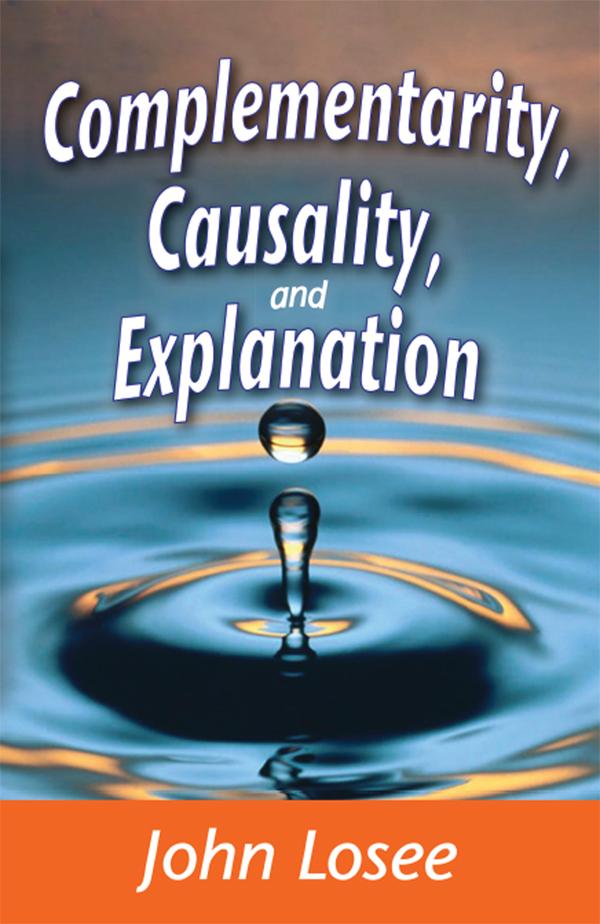
Philosophers have discussed the relationship of cause and effect from ancient times through our own. Prior to the work of Niels Bohr, these discussions presupposed that successful causal attribution implies explanation. The success of quantum theory challenged this presupposition. Bohr introduced a principle of complementarity that provides a new way of looking at causality and explanation.In this succinct review of the history of these discussions, John Losee presents the philosophical background of debates over the cause-effect relation. He reviews the positions of Aristotle, Rene Descartes, Isaac Newton, David Hume, Immanuel Kant, and John Stuart Mill. He shows how nineteenth-century theories in physics and chemistry were informed by a dominant theory of causality and how specific developments in physics provided the background for the emergence of quantum theory.Problems created for the causality implies explanation thesis by the emergence of quantum theory are reviewed in detail. Losee evaluates Bohr's proposals to apply a principle of complementarity within physics, biology, and psychology. He also discusses the feasibility of using complementarity as a principle of interpretation within Christian theology. This volume, which includes an in-depth index, is an essential addition to the libraries of advanced undergraduate and graduate students, philosophers, and those interested in causality and explanation.
Betal nemt med kort, Klarna, Apple Pay eller Google Pay. Ikke tilfreds? Du har altid 14 dages fortrydelsesret. Læs mere i vores vilkår. Har du spørgsmål, så send os en mail på hello@memmo.org.
Memmo gør det nemmere at studere – uanset hvor du er i verden. Hos os samler du dine kursusbøger og smarte studieværktøjer ét sted: resuméer, quizzer, podcasts og flashcards. Og så er der Ted, din studieven, der svarer på alt, du undrer dig over. Over 50 000 studerende studerer allerede her – bygget til at hjælpe dig med at lære hurtigere og stresse mindre.
Du kan måske også lide
Køb bogen0