
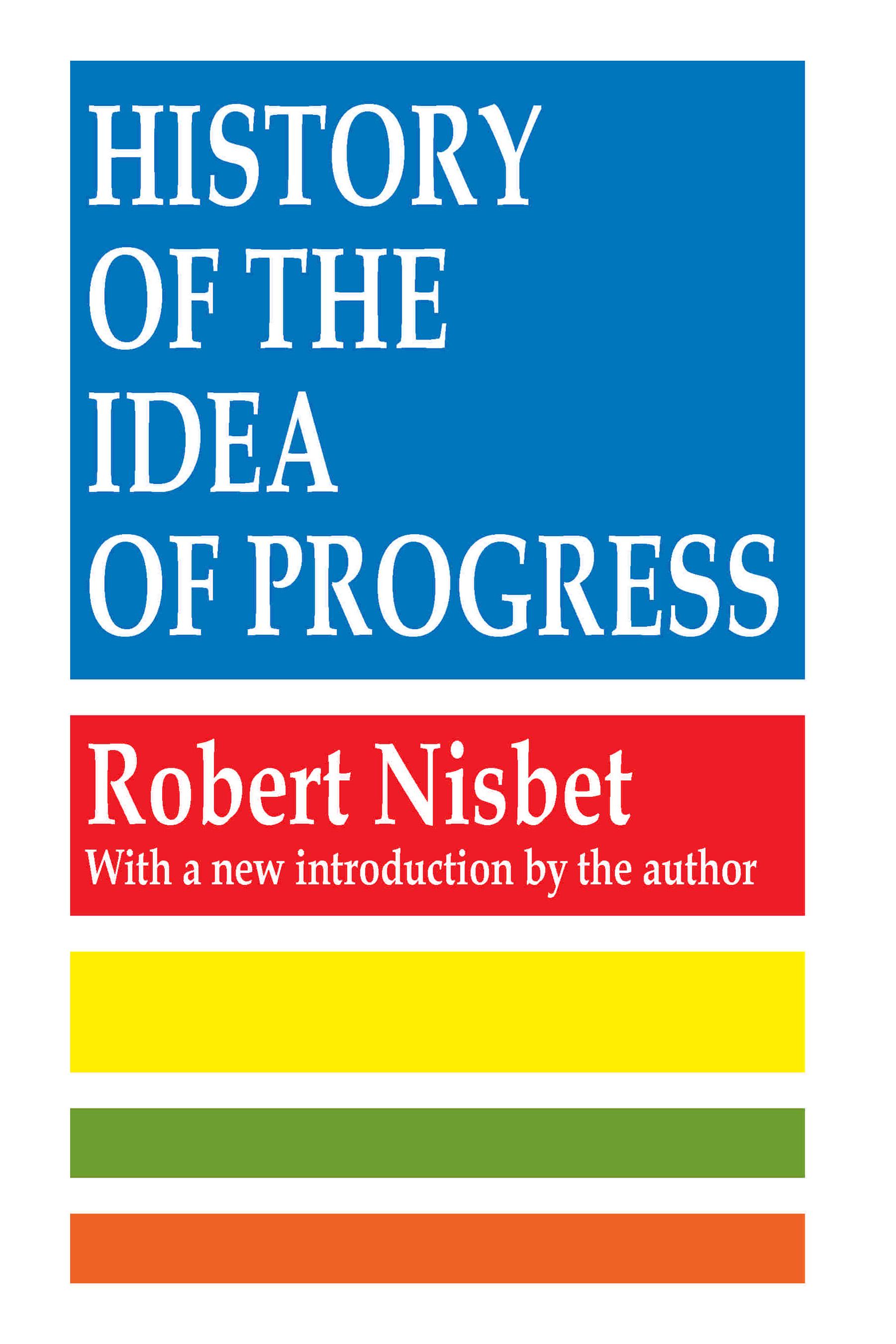
The idea of progress from the Enlightenment to postmodernism is still very much with us. In intellectual discourse, journals, popular magazines, and radio and talk shows, the debate between those who are "progressivists" and those who are "declinists" is as spirited as it was in the late seventeenth century. In History of the Idea of Progress, Robert Nisbet traces the idea of progress from its origins in Greek, Roman, and medieval civilizations to modern times. It is a masterful frame of reference for understanding the present world.
Nisbet asserts there are two fundamental building blocks necessary to Western doctrines of human advancement: the idea of growth, and the idea of necessity. He sees Christianity as a key element in both secular and spiritual evolution, for it conveys all the ingredients of the modern idea of progress: the advancement of the human race in time, a single time frame for all the peoples and epochs of the past and present, the conception of time as linear, and the envisagement of the future as having a Utopian end.
In his new introduction, Nisbet shows why the idea of progress remains of critical importance to studies of social evolution and natural history. He provides a contemporary basis for many disciplines, including sociology, economics, philosophy, religion, politics, and science. History of the Idea of Progress continues to be a major resource for scholars in all these areas.
Betal nemt med kort, Klarna, Apple Pay eller Google Pay. Ikke tilfreds? Du har altid 14 dages fortrydelsesret. Læs mere i vores vilkår. Har du spørgsmål, så send os en mail på hello@memmo.org.
Memmo gør det nemmere at studere – uanset hvor du er i verden. Hos os samler du dine kursusbøger og smarte studieværktøjer ét sted: resuméer, quizzer, podcasts og flashcards. Og så er der Ted, din studieven, der svarer på alt, du undrer dig over. Over 50 000 studerende studerer allerede her – bygget til at hjælpe dig med at lære hurtigere og stresse mindre.