
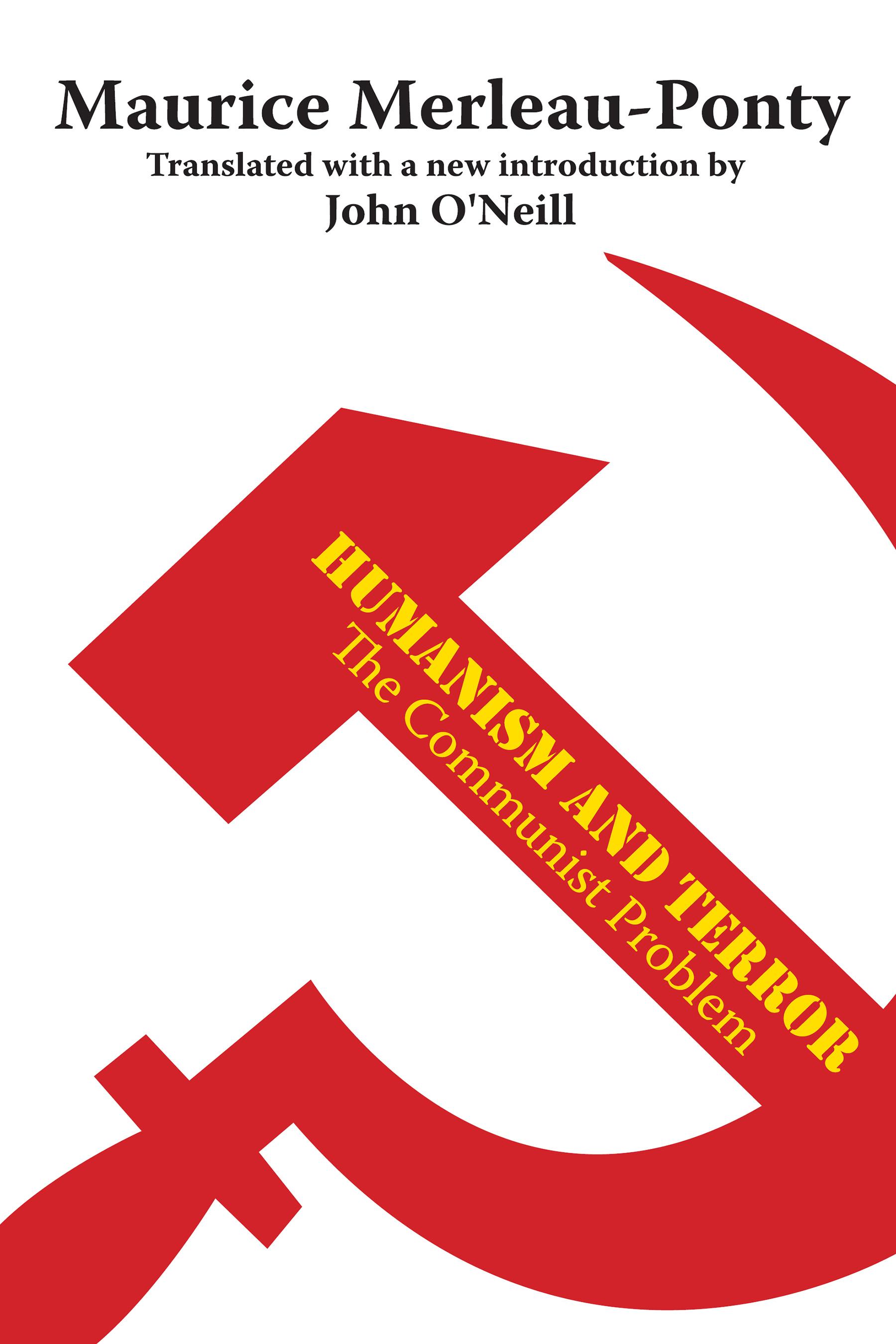
Raymond Aron called Merleau-Ponty "the most influential French philosopher of his generation." First published in France in 1947, Humanism and Terror was in part a response to Arthur Koestler's Darkness at Noon, and in a larger sense a contribution to the political and moral debates of a postwar world suddenly divided into two ideological armed camps. For Merleau-Ponty, the central question was: could Communism transcend its violence and intentions?The value of a society is the value it places upon man's relation to man, Merleau-Ponty examines not only the Moscow trials of the late thirties but also Koestler's re-creation of them. He argues that violence in general in the Communist world can be understood only in the context of revolutionary activism. He demonstrates that it is pointless to ask whether Communism respects the rules of liberal society; it is evident that Communism does not.In post-Communist Europe, when many are addressing similar questions throughout the world, Merleau-Ponty's discourse is of prime importance; it stands as a major and provocative contribution to limits on the use of violence. The argument is placed in its current context in a brilliant new introduction by John O'Neill. His remarks extend the line of argument originally developed by the great French political philosopher. This is a major contribution to political theory and philosophy.
Betal nemt med kort, Klarna, Apple Pay eller Google Pay. Ikke tilfreds? Du har altid 14 dages fortrydelsesret. Læs mere i vores vilkår. Har du spørgsmål, så send os en mail på hello@memmo.org.
Memmo gør det nemmere at studere – uanset hvor du er i verden. Hos os samler du dine kursusbøger og smarte studieværktøjer ét sted: resuméer, quizzer, podcasts og flashcards. Og så er der Ted, din studieven, der svarer på alt, du undrer dig over. Over 50 000 studerende studerer allerede her – bygget til at hjælpe dig med at lære hurtigere og stresse mindre.
Du kan måske også lide
Køb bogen0