
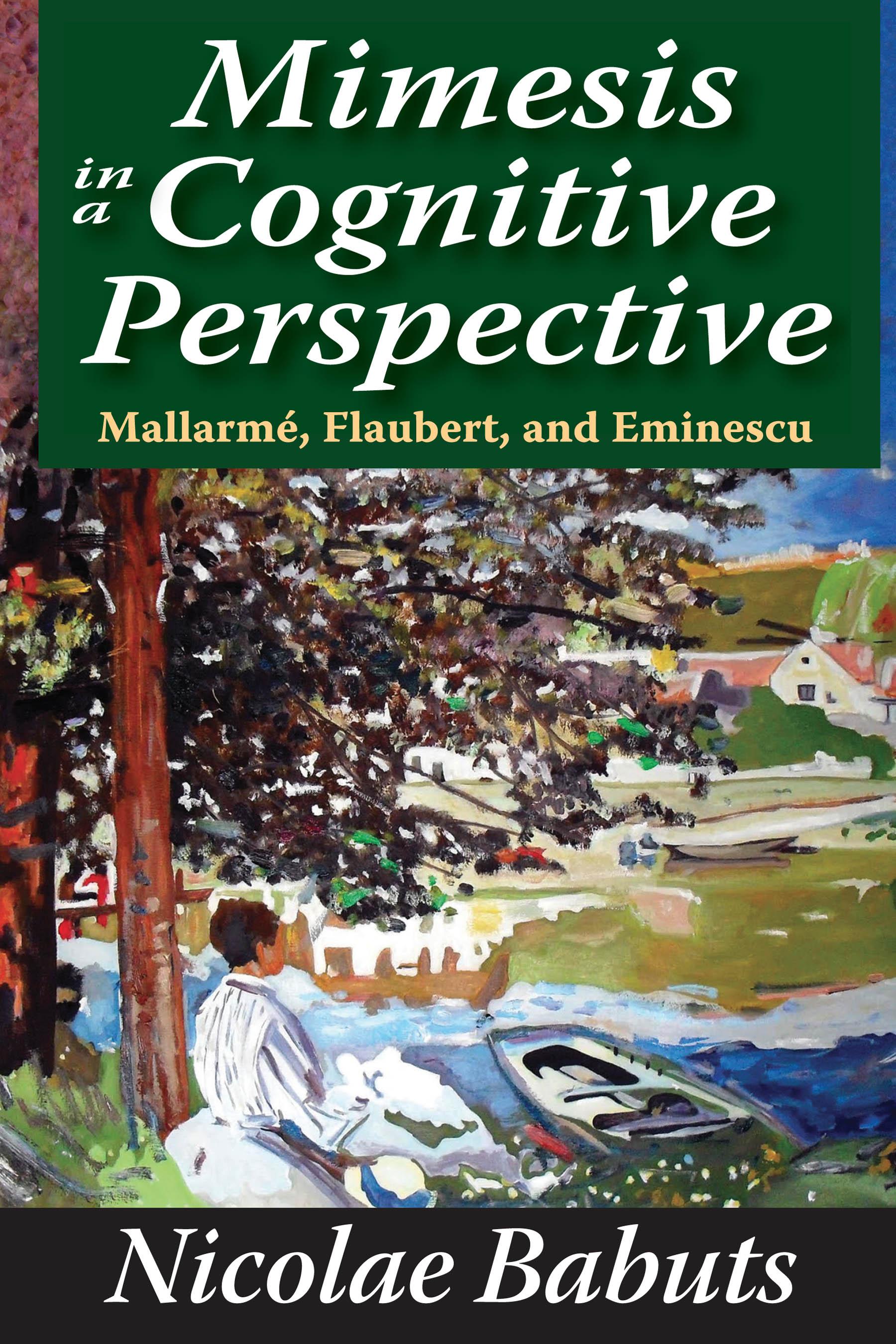
Mimesis is a critical and philosophical term going back to Aristotle. It carries a wide range of meanings, including imitation, representation, mimicry, the act of expression, and the presentation of self. In modern literary criticism, mimesis has received renewed attention in the last two or three decades and been subject to wide-ranging interpretations. Nicolae Babuts looks at the concept of mimesis from a cognitive perspective. He identifies two main strands: the mimetic relation of art and poetry to the world, defined in terms of reference to an external reality, and the importance of memory in the making of plots or storytelling.Babuts suggests that there is a material identity we cannot know beyond the limits of our senses and intellect and a symbolic or coded identity that is processed by memory. All writers, including Mallarme in his esoteric poetry, Flaubert in his realist narratives, and Mihai Eminescu, the Romanian poet, in his romantic poems, rely on mimetic strategies to link the two identities: the images in memory to the outside reality. All order their narratives in accordance with the dynamics of memory. Babuts describes this phenomenon with great insight, showing how new traditions are formed.
Betal nemt med kort, Klarna, Apple Pay eller Google Pay. Ikke tilfreds? Du har altid 14 dages fortrydelsesret. Læs mere i vores vilkår. Har du spørgsmål, så send os en mail på hello@memmo.org.
Memmo gør det nemmere at studere – uanset hvor du er i verden. Hos os samler du dine kursusbøger og smarte studieværktøjer ét sted: resuméer, quizzer, podcasts og flashcards. Og så er der Ted, din studieven, der svarer på alt, du undrer dig over. Over 50 000 studerende studerer allerede her – bygget til at hjælpe dig med at lære hurtigere og stresse mindre.
Du kan måske også lide
Køb bogen0