
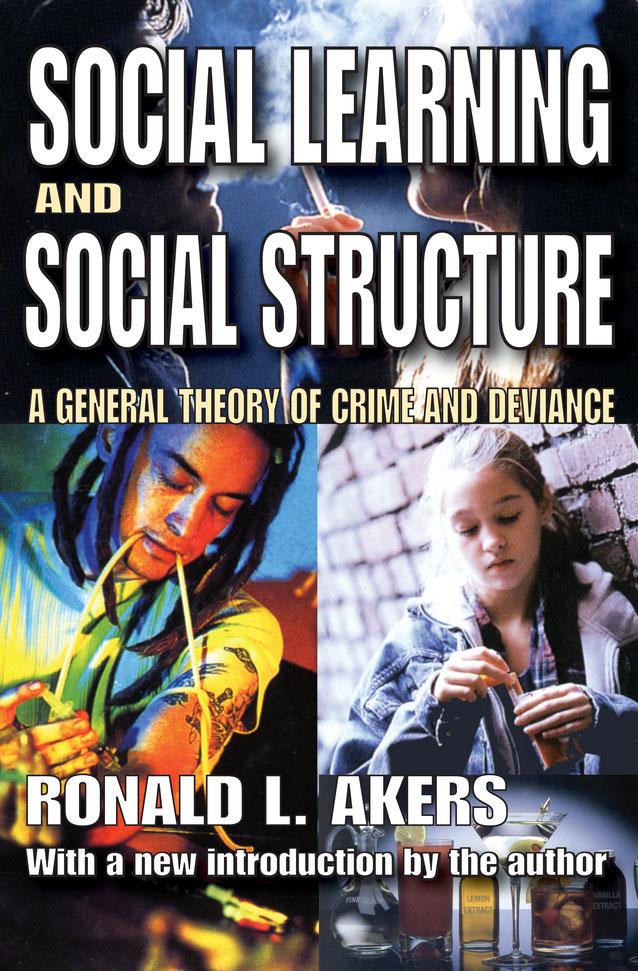
The social learning theory of crime integrates Edwin H. Sutherland's diff erential association theory with behavioral learning theory. It is a widely accepted and applied approaches to criminal and deviant behavior. However, it is also widely misinterpreted, misstated, and misapplied.This is the fi rst single volume, in-depth, authoritative discussion of the background, concepts, development, modifications, and empirical tests of social learning theory. Akers begins with a personal account of Sutherland's involvement in criminology and the origins of his infl uential perspective. He then traces the intellectual history of Sutherland's theory as well as social learning theory, providing a comprehensive explanation of how each theory approaches illegal behavior. Akers reviews research on various correlates and predictors of crime and delinquency that may be used as operational measures of differential association, reinforcement, and other social learning concepts.Akers proposes a new, integrated theory of social learning and social structure that links group diff erences in crime to individual conduct. He concludes with a cogent discussion of the implications of social learning theory for criminology and public policy. Now available in paperback, with a new introduction by the author, this volume will be invaluable to professionals and for use in courses in criminology and deviance.
Betal nemt med kort, Klarna, Apple Pay eller Google Pay. Ikke tilfreds? Du har altid 14 dages fortrydelsesret. Læs mere i vores vilkår. Har du spørgsmål, så send os en mail på hello@memmo.org.
Memmo gør det nemmere at studere – uanset hvor du er i verden. Hos os samler du dine kursusbøger og smarte studieværktøjer ét sted: resuméer, quizzer, podcasts og flashcards. Og så er der Ted, din studieven, der svarer på alt, du undrer dig over. Over 50 000 studerende studerer allerede her – bygget til at hjælpe dig med at lære hurtigere og stresse mindre.
Du kan måske også lide
Køb bogen0