
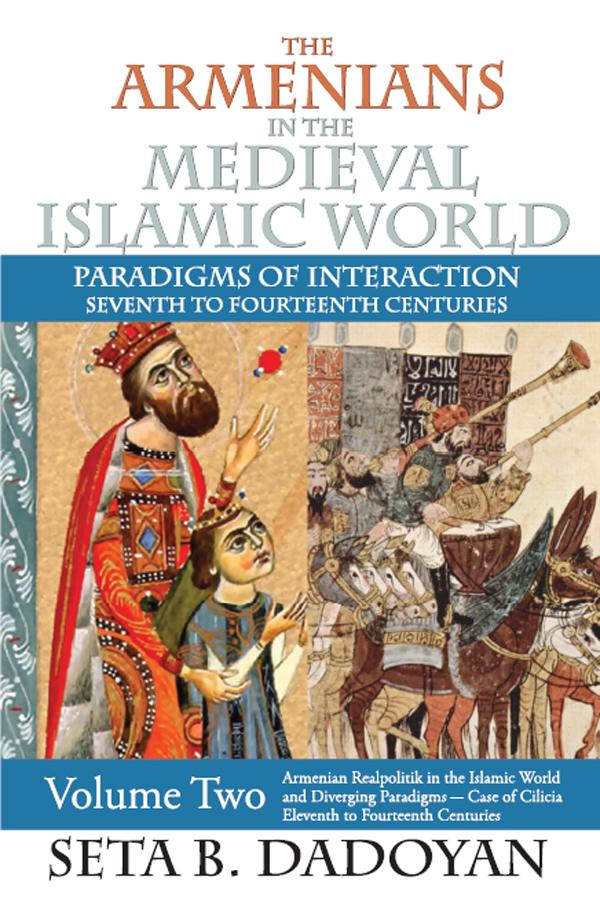
In the second of a three-volume work, Seta B. Dadoyan explores the Armenian condition from the 970s to the end of the fourteenth century. This period marked the gradual loss of semi-autonomy on the traditional mainland and the rise of Armenian power of diverging patterns in southeastern Asia Minor, north Syria, Cilicia, and Egypt. Dadoyan's premise is that if Armenians and Armenia have always been located in the Middle East and the Islamic world, then their history is also a natural part of that region and its peoples. She observes that the Armenian experience has been too complicated to be defined by simplistic constructs centered on the idea of a heroic, yet victimized nation. She notes that a certain politics of historical writing, supported by a culture of authority, has focused sharply on episodes and, in particular, on the genocide. For her sources, Dadoyan has used all available and relevant (primary and secondary) Armenian sources, as well as primary Arab texts and sources. This book will stimulate re-evaluation of the period, and re-conceptualizing Armenian and Middle Eastern histories.
Betal nemt med kort, Klarna, Apple Pay eller Google Pay. Ikke tilfreds? Du har altid 14 dages fortrydelsesret. Læs mere i vores vilkår. Har du spørgsmål, så send os en mail på hello@memmo.org.
Memmo gør det nemmere at studere – uanset hvor du er i verden. Hos os samler du dine kursusbøger og smarte studieværktøjer ét sted: resuméer, quizzer, podcasts og flashcards. Og så er der Ted, din studieven, der svarer på alt, du undrer dig over. Over 50 000 studerende studerer allerede her – bygget til at hjælpe dig med at lære hurtigere og stresse mindre.
Du kan måske også lide
Køb bogen0