
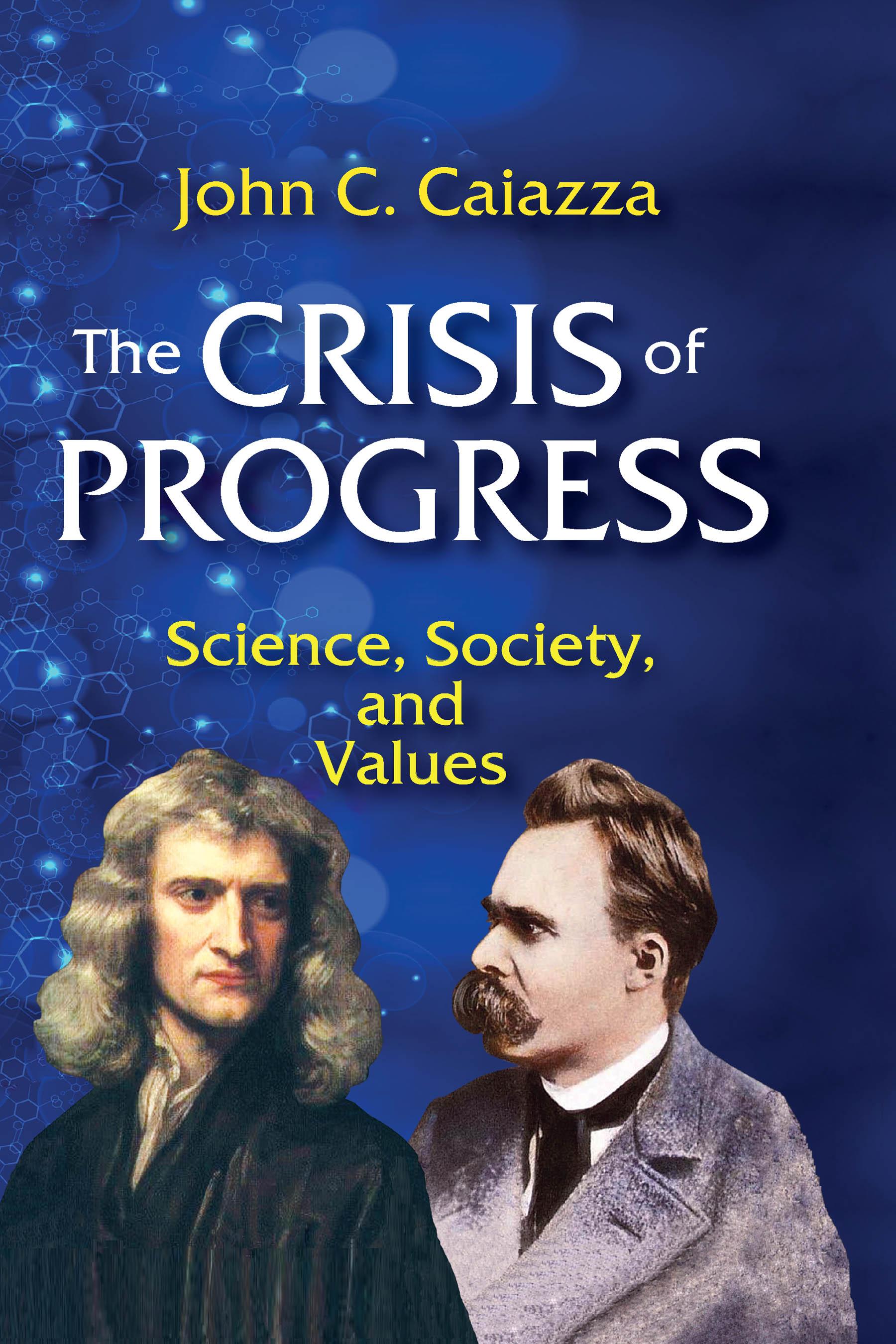
This book is about the concept of progress, its separate varieties, its current rejection, and how it may be reconsidered from a philosophical and scientific basis. John C. Caiazza's main emphasis is on how science is understood as it has a direct impact on social values as expressed by prominent philosophers. He argues that progress is at a standstill, which presents a crisis for Western civilization.Caiazza presents historical examples, both of scientific inquiry and social and cultural themes, to examine the subject of progress. Beginning with the Whig model and progressive political values exemplified by Bacon and Dewey, he also examines other variations, the Enlightenment, cosmopolitanism, and totalitarianism. Technology, argues Caiazza, also has a stultifying effect on Western culture and to understand the idea of progress, we must take a philosophic rather than a scientific point of view. Modern cosmology has inevitable humanistic and theological implications, and major contemporary philosophers reject social science in favour of ancient concepts of virtue and ethics.In the end, Caiazza writes that time is an agent, not a neutral plain on which scientific and historical events occur. We can expect technology to keep us in stasis or become aware of the possibility of transcendence. This book will be of interest for students of scientific history and philosophy.
Betal nemt med kort, Klarna, Apple Pay eller Google Pay. Ikke tilfreds? Du har altid 14 dages fortrydelsesret. Læs mere i vores vilkår. Har du spørgsmål, så send os en mail på hello@memmo.org.
Memmo gør det nemmere at studere – uanset hvor du er i verden. Hos os samler du dine kursusbøger og smarte studieværktøjer ét sted: resuméer, quizzer, podcasts og flashcards. Og så er der Ted, din studieven, der svarer på alt, du undrer dig over. Over 50 000 studerende studerer allerede her – bygget til at hjælpe dig med at lære hurtigere og stresse mindre.
Du kan måske også lide
Køb bogen0