
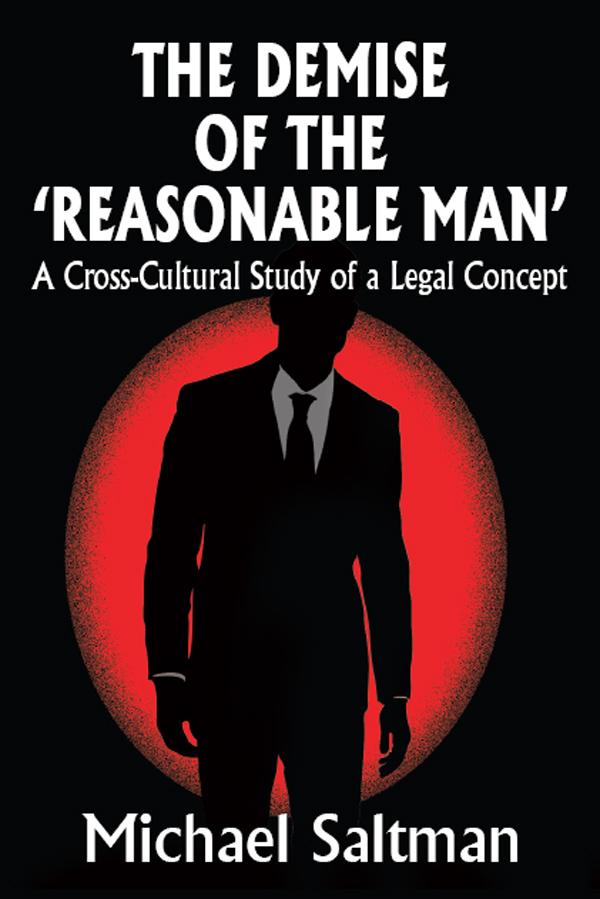
Judges in most societies often resort to resolving disputes by means of applying a criterion of reasonableness. In The Demise of the'Reasonable Man' Michael Saltman explores the ways in which reasonableness varies from one legal culture to another, defined by the relative presence or absence of centralized political power. In non-politically centralized societies, Saltman says, judges seek meanings underlying human behavior, and try to place reasonableness within a societal and cultural context. This is possible because primitive societies are relatively homogenous in their values and tend towards consensus when determining what constitutes reasonable behavior. In contrast, modern judges resort to standards of reasonableness only when the legal standard is unclear. Saltman contrasts judges in politically centralized societies, who, in the absence of such consensus, have the authority to determine, on the basis of that authority, what constitutes reasonableness. This rich volume references case studies drawn from ethnographic fieldwork, historical sources, and law reports to demonstrate differences in judicial attitudes toward reasonableness.
Betal nemt med kort, Klarna, Apple Pay eller Google Pay. Ikke tilfreds? Du har altid 14 dages fortrydelsesret. Læs mere i vores vilkår. Har du spørgsmål, så send os en mail på hello@memmo.org.
Memmo gør det nemmere at studere – uanset hvor du er i verden. Hos os samler du dine kursusbøger og smarte studieværktøjer ét sted: resuméer, quizzer, podcasts og flashcards. Og så er der Ted, din studieven, der svarer på alt, du undrer dig over. Over 50 000 studerende studerer allerede her – bygget til at hjælpe dig med at lære hurtigere og stresse mindre.
Du kan måske også lide
Køb bogen0