
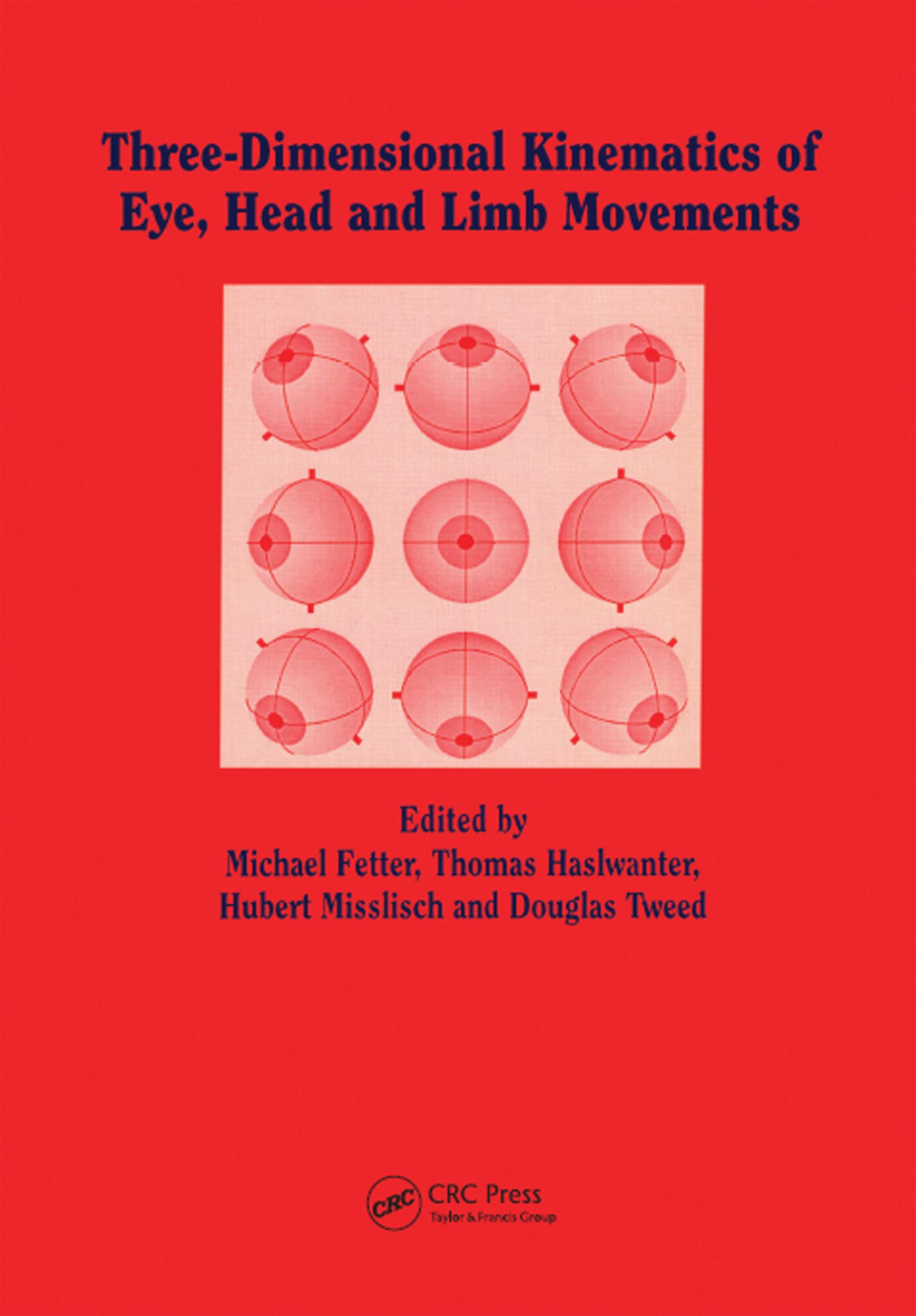
The 19th-century pioneers of motor physiology — Helmholtz, Hering, Fick and others — used the mathematics of motion, known as kinematics, to describe the laws of human movement and to deduce the neural control principles underlying these laws. After long neglect — partly due to limitations in stimulation and recording techniques — the kinematic approach is now resurging, fortified with modern computers and electrophysiology. New developments in recording techniques, as well as an improved understanding of the complex control properties of three-dimensional movements, have led to a flood of new research in this area. The classical laws of Donders and Listing have been confirmed and generalized, and computer simulations of the neural control of three-dimensional movement have been developed and tested. In this book, some of the world's leading scientists of motor control discuss how the brain represents and transforms the kinematic variables of movement. Background chapters explain the basic concepts — non-commutativity, redundancy and the classical laws — and their application to normal function and motor disorders, and shorter articles describe current research. The contributions are based on presentations at a symposium held in Tubingen in August 1995. The wide scope of the book should enable researchers to gain an overview of current research, but should also help newcomers to the field to get a good understanding of the questions and problems involved in three-dimensional movement control.
Betal nemt med kort, Klarna, Apple Pay eller Google Pay. Ikke tilfreds? Du har altid 14 dages fortrydelsesret. Læs mere i vores vilkår. Har du spørgsmål, så send os en mail på hello@memmo.org.
Memmo gør det nemmere at studere – uanset hvor du er i verden. Hos os samler du dine kursusbøger og smarte studieværktøjer ét sted: resuméer, quizzer, podcasts og flashcards. Og så er der Ted, din studieven, der svarer på alt, du undrer dig over. Over 50 000 studerende studerer allerede her – bygget til at hjælpe dig med at lære hurtigere og stresse mindre.