
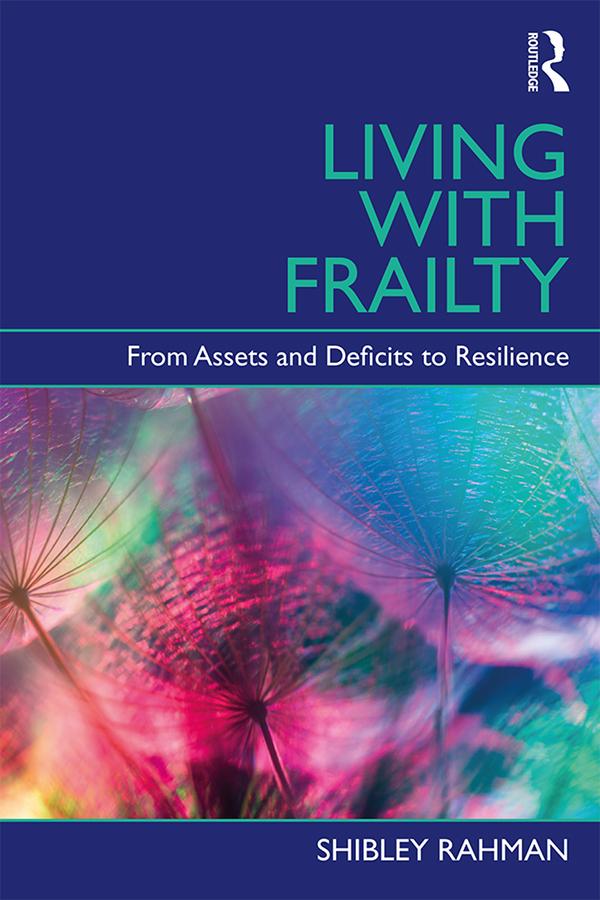
Increasingly, we question ‘what makes us healthy?’, as well as ‘what makes us ill?’. What does this shift mean for frailty? Almost wholly defined in negative terms, the term ‘frail’ tends to refer to a group of older people who are at highest risk of adverse outcomes such as falls, infections, disability, admission to hospital or the need for long-term care. This ground-breaking book takes a holistic approach to frailty. It connects the medical literature with the wider social science discourse on ageing, and focuses on promoting wellbeing and the building up of strengths.
Living with Frailty draws together the latest biomedical evidence and good practice in this emerging area and explores ideas about assets and resilience, the role of society and the social model of disability in relation to frailty, arguing that insufficient attention is paid to positive action such as developing bone strength, maintaining good nutrition and exercising. Chapters look at:
- existing models of frailty
- person-centred care
- assessing frailty and quality of life
- how falls, and fear of falls, relate to discussions of frailty
- delirium and frailty
- the environment and frailty
- sarcopenia.
Living with Frailty is an important introduction and reference for all practitioners, researchers and students with an interest in frailty, wellbeing and social approaches to health.
Forewords by Professors Ken Rockwood, Dalhousie University, and Adam Gordon, Nottingham University.
Betal nemt med kort, Klarna, Apple Pay eller Google Pay. Ikke tilfreds? Du har altid 14 dages fortrydelsesret. Læs mere i vores vilkår. Har du spørgsmål, så send os en mail på hello@memmo.org.
Memmo gør det nemmere at studere – uanset hvor du er i verden. Hos os samler du dine kursusbøger og smarte studieværktøjer ét sted: resuméer, quizzer, podcasts og flashcards. Og så er der Ted, din studieven, der svarer på alt, du undrer dig over. Over 50 000 studerende studerer allerede her – bygget til at hjælpe dig med at lære hurtigere og stresse mindre.