
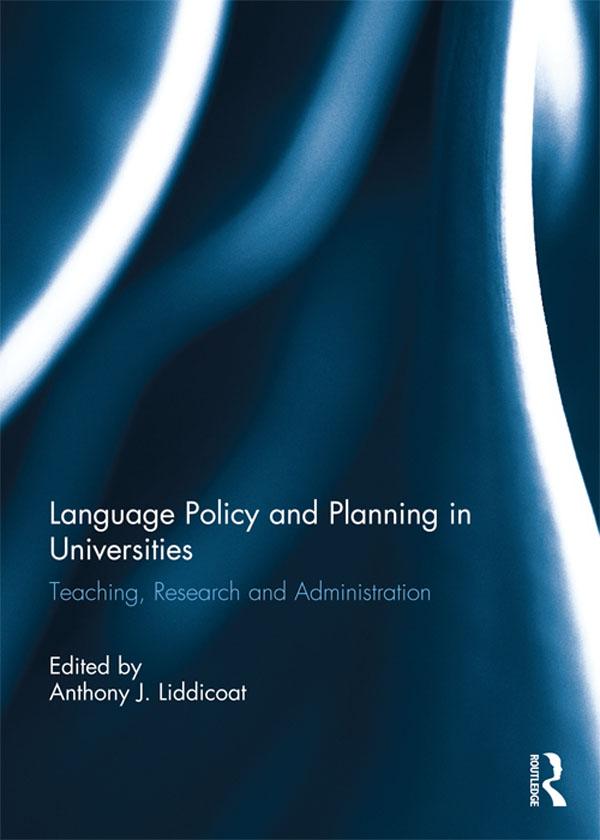
In a world where higher education is increasingly internationalised, questions of language use and multilingualism are central to the ways in which universities function in teaching, research and administration. Contemporary universities find themselves in complex linguistic environments that may include national level language policies, local linguistic diversity, an internationalised student body, increasing international collaboration in research, and increased demand for the use and learning of international languages, especially English.
The book presents a critical analysis of how universities are responding these complexities in different contexts around the world. The contributions show that language issues in universities are complex and often contested as universities try to negotiate the national and the international in their work. In some contexts, universities’ language policies and the ways in which they are implemented may have a negative impact on their ways of working. In other contexts, however, universities have embraced multilingualism in ways that have opened up new academic possibilities for staff and students. Collectively, the chapters show that universities’ language policy and planning are a work in progress and that much further work is needed for universities to achieve their language goals. This book was originally published as a special issue of Current Issues in Language Planning.
Betal nemt med kort, Klarna, Apple Pay eller Google Pay. Ikke tilfreds? Du har altid 14 dages fortrydelsesret. Læs mere i vores vilkår. Har du spørgsmål, så send os en mail på hello@memmo.org.
Memmo gør det nemmere at studere – uanset hvor du er i verden. Hos os samler du dine kursusbøger og smarte studieværktøjer ét sted: resuméer, quizzer, podcasts og flashcards. Og så er der Ted, din studieven, der svarer på alt, du undrer dig over. Over 50 000 studerende studerer allerede her – bygget til at hjælpe dig med at lære hurtigere og stresse mindre.