
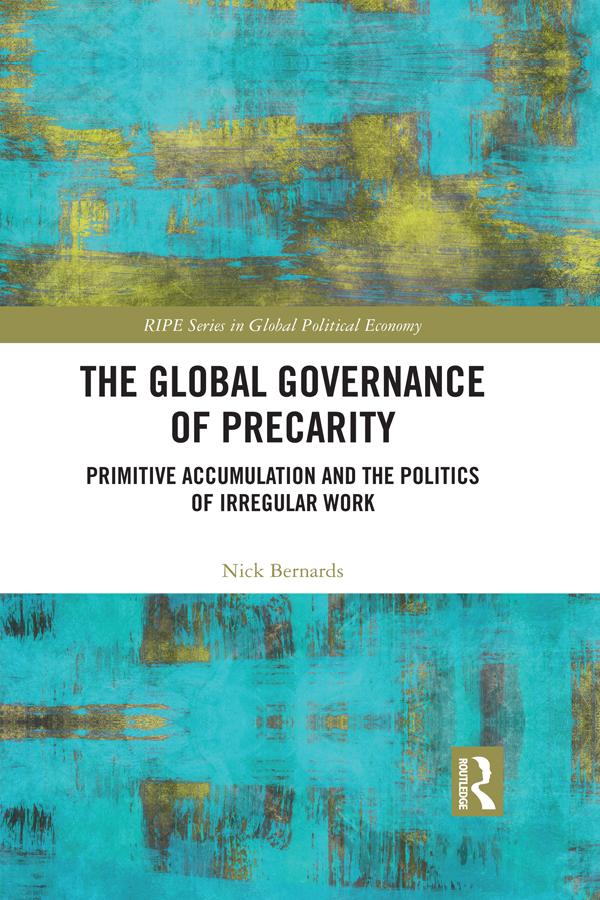
‘Standard’ employment relationships, with permanent contracts, regular hours, and decent pay, are under assault. Precarious work and unemployment are increasingly common, and concern is also growing about the expansion of informal work and the rise of ‘modern slavery’. However, precarity and violence are in fact longstanding features of work for most of the world’s population. Lamenting the ‘loss’ of secure, stable jobs often reflects a strikingly Eurocentric and historically myopic perspective.
This book argues that standard employment relations have always co-existed with a plethora of different labour regimes. Highlighting the importance of the governance of irregular forms of labour the author draws together empirical, historical analyses of International Labour Organisation (ILO) policy towards forced labour, unemployment, and social protection for informal workers in sub-Saharan Africa. Archival research, extensive documentary research and interviews with key ILO staff are utilised to explore the critical role the organization’s activities have often played in the development of mechanisms for governing irregular labour.
Addressing the increasingly widespread and pressing practical debates about the politics of precarious labour in the world economy this book speaks to key debates in several disciplines, especially IPE, global governance, and labour studies. It will also be of interest to scholars working in development studies and critical political economy.
Betal nemt med kort, Klarna, Apple Pay eller Google Pay. Ikke tilfreds? Du har altid 14 dages fortrydelsesret. Læs mere i vores vilkår. Har du spørgsmål, så send os en mail på hello@memmo.org.
Memmo gør det nemmere at studere – uanset hvor du er i verden. Hos os samler du dine kursusbøger og smarte studieværktøjer ét sted: resuméer, quizzer, podcasts og flashcards. Og så er der Ted, din studieven, der svarer på alt, du undrer dig over. Over 50 000 studerende studerer allerede her – bygget til at hjælpe dig med at lære hurtigere og stresse mindre.