
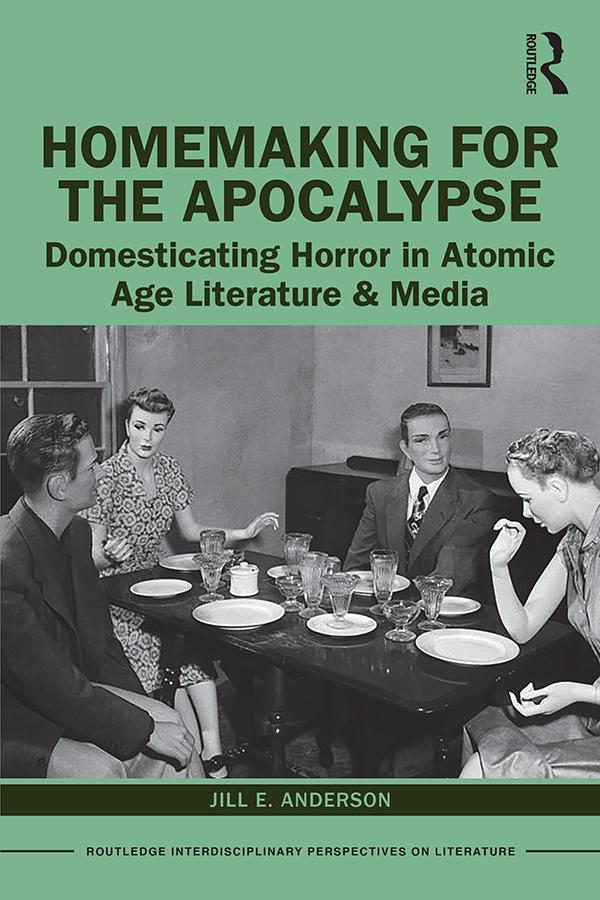
In Homemaking for the Apocalypse, Jill E. Anderson interrogates patterns of Atomic Age conformity that controlled the domestic practices and private activities of Americans. Used as a way to promote security in a period rife with anxieties about nuclear annihilation and The Bomb, these narratives of domesticity were governed by ideals of compulsory normativity, and their circulation upheld the wholesale idealization of homemaking within a white, middle-class nuclear family and all that came along with it: unchecked reproduction, constant consumerism, and a general policing of practices deemed contradictory to normative American life. Homemaking for the apocalypse seeks out the disruptions to the domestic ideals found in memoirs, Civil Defense literature, the fallout shelter debate, horror films, comics, and science fiction, engaging in elements of horror in order to expose how closely domestic practices are tied to dread and anxiety. Homemaking for the Apocalypse offers a narrative of the Atomic Age that calls into question popular memory’s acceptance of the conformity thesis and proposes new methods for critiquing the domestic imperative of the period by acknowledging its deep tie to horror.
Betal nemt med kort, Klarna, Apple Pay eller Google Pay. Ikke tilfreds? Du har altid 14 dages fortrydelsesret. Læs mere i vores vilkår. Har du spørgsmål, så send os en mail på hello@memmo.org.
Memmo gør det nemmere at studere – uanset hvor du er i verden. Hos os samler du dine kursusbøger og smarte studieværktøjer ét sted: resuméer, quizzer, podcasts og flashcards. Og så er der Ted, din studieven, der svarer på alt, du undrer dig over. Over 50 000 studerende studerer allerede her – bygget til at hjælpe dig med at lære hurtigere og stresse mindre.