
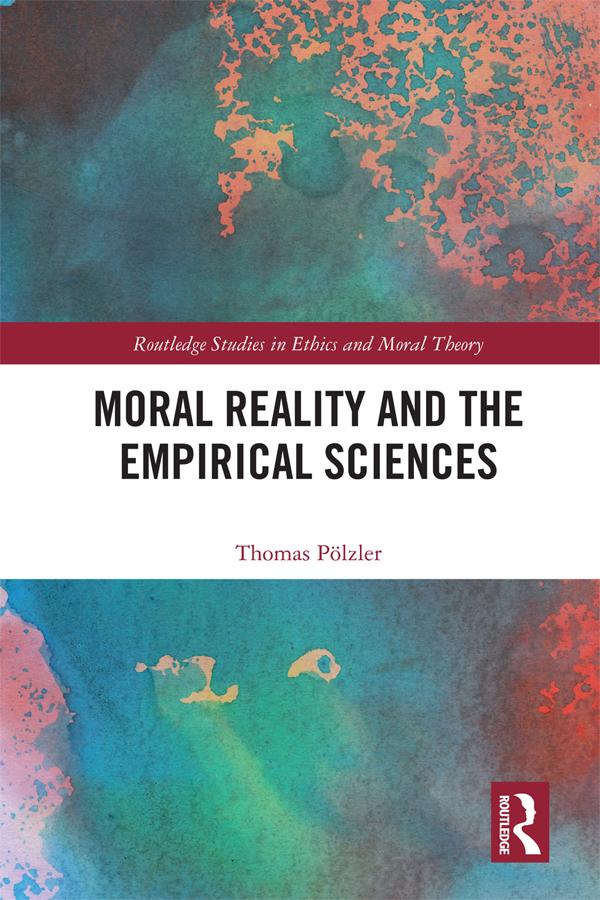
Are there objective moral truths (things that are morally right or wrong independently of what anybody thinks about them)? To answer this question more and more scholars have recently begun to appeal to evidence from scientific disciplines such as psychology, neuroscience, biology, and anthropology. This book investigates this novel scientific approach in a comprehensive, empirically focused, partly clarificatory, and partly metatheoretical way. It argues for two main theses. First, it is possible for the empirical sciences to contribute to the moral realism/anti-realism debate. And second, most appeals to science that have so far been proposed are insufficiently empirically substantiated.
The book’s main chapters address four prominent science-based arguments for or against the existence of objective moral truths: the presumptive argument, the argument from moral disagreement, the sentimentalist argument, and the evolutionary debunking argument. For each of these arguments Thomas Pölzler first identifies the sense in which its underlying empirical hypothesis would have to be true in order for the argument to work. Then he shows that the available scientific evidence fails to support this hypothesis. Finally, he also makes suggestions as to how to test the hypothesis more validly in future scientific research.
Moral Reality and the Empirical Sciences is an important contribution to the moral realism/anti-realism debate that will appeal both to philosophers and scientists interested in moral psychology and metaethics.
Betal nemt med kort, Klarna, Apple Pay eller Google Pay. Ikke tilfreds? Du har altid 14 dages fortrydelsesret. Læs mere i vores vilkår. Har du spørgsmål, så send os en mail på hello@memmo.org.
Memmo gør det nemmere at studere – uanset hvor du er i verden. Hos os samler du dine kursusbøger og smarte studieværktøjer ét sted: resuméer, quizzer, podcasts og flashcards. Og så er der Ted, din studieven, der svarer på alt, du undrer dig over. Over 50 000 studerende studerer allerede her – bygget til at hjælpe dig med at lære hurtigere og stresse mindre.