
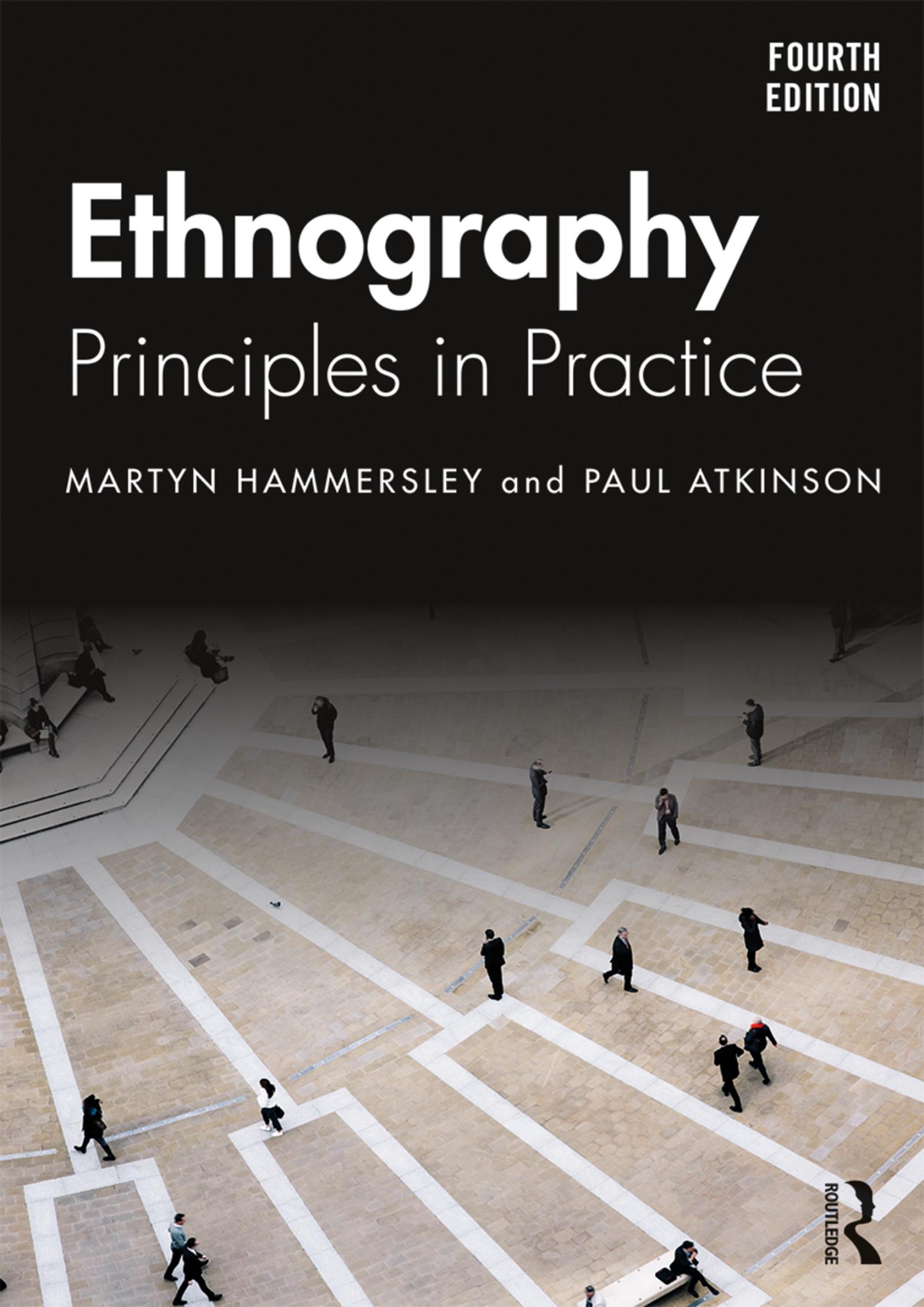
Now in its fourth edition, this leading introduction to ethnography has been thoroughly updated and substantially rewritten. The volume offers a systematic introduction to ethnographic principles and practice, and includes a new chapter on ‘Ethnography in the digital world’.
The authors argue that ethnography is best understood as a reflexive process. This requires recognition that social research is part of the world that it studies, and demands that researchers reflect on how they shape both data and analysis. Starting in Chapter 1 with an outline of the principle of reflexivity, against the background of competing research philosophies, the authors go on to discuss the main features of ethnographic work, including:
- the selection and sampling of cases
- the problem of access
- field relations and observation
- interviewing
- the use of documents
- recording and organizing data
-
the process of data analysis and writing research reports.
There is also consideration of the ethical issues involved in ethnographic research. Throughout, the discussion draws on a wide range of illustrative material from classic and more recent studies, within a global context. The new edition of this popular textbook will be an indispensable resource for undergraduate and postgraduate students, and for all researchers using ethnographic methods in the social sciences and the humanities.
Betal nemt med kort, Klarna, Apple Pay eller Google Pay. Ikke tilfreds? Du har altid 14 dages fortrydelsesret. Læs mere i vores vilkår. Har du spørgsmål, så send os en mail på hello@memmo.org.
Memmo gør det nemmere at studere – uanset hvor du er i verden. Hos os samler du dine kursusbøger og smarte studieværktøjer ét sted: resuméer, quizzer, podcasts og flashcards. Og så er der Ted, din studieven, der svarer på alt, du undrer dig over. Over 50 000 studerende studerer allerede her – bygget til at hjælpe dig med at lære hurtigere og stresse mindre.