
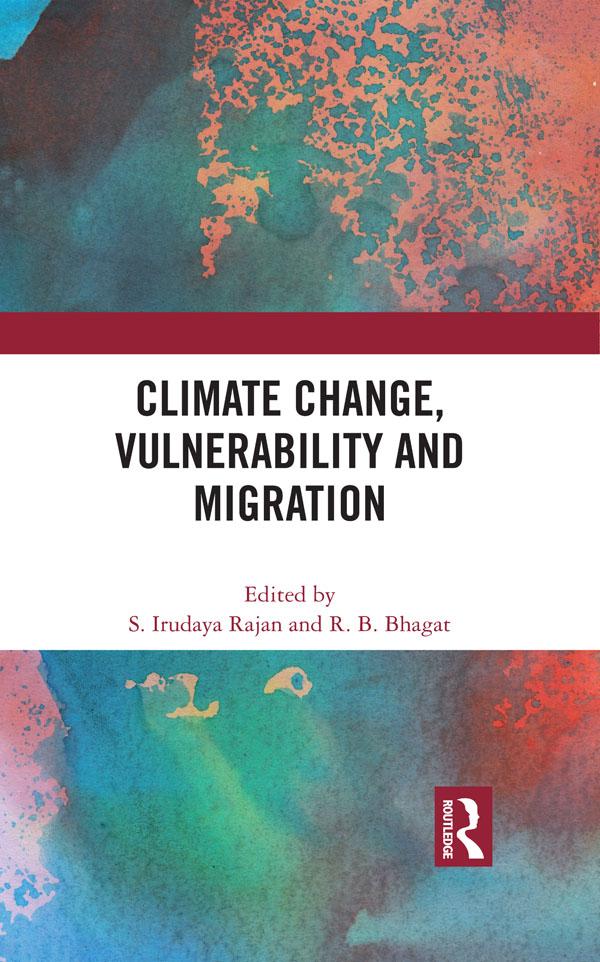
This book highlights how climate change has affected migration in the Indian subcontinent. Drawing on field research, it argues that extreme weather events such as floods, droughts, cyclones, cloudbursts as well as sea-level rise, desertification and declining crop productivity have shown higher frequency in recent times and have depleted bio-physical diversity and the capacity of the ecosystem to provide food and livelihood security. The volume shows how the socio-economically poor are worst affected in these circumstances and resort to migration to survive.
The essays in the volume study the role of remittances sent by migrants to their families in environmentally fragile zones in providing an important cushion and adaptation capabilities to cope with extreme weather events. The book looks at the socio-economic and political drivers of migration, different forms of mobility, mortality and morbidity levels in the affected population, and discusses mitigation and adaption strategies.
The volume will be of great interest to scholars and researchers of environment and ecology, migration and diaspora studies, development studies, sociology and social anthropology, governance and public policy, and politics.
Betal nemt med kort, Klarna, Apple Pay eller Google Pay. Ikke tilfreds? Du har altid 14 dages fortrydelsesret. Læs mere i vores vilkår. Har du spørgsmål, så send os en mail på hello@memmo.org.
Memmo gør det nemmere at studere – uanset hvor du er i verden. Hos os samler du dine kursusbøger og smarte studieværktøjer ét sted: resuméer, quizzer, podcasts og flashcards. Og så er der Ted, din studieven, der svarer på alt, du undrer dig over. Over 50 000 studerende studerer allerede her – bygget til at hjælpe dig med at lære hurtigere og stresse mindre.