
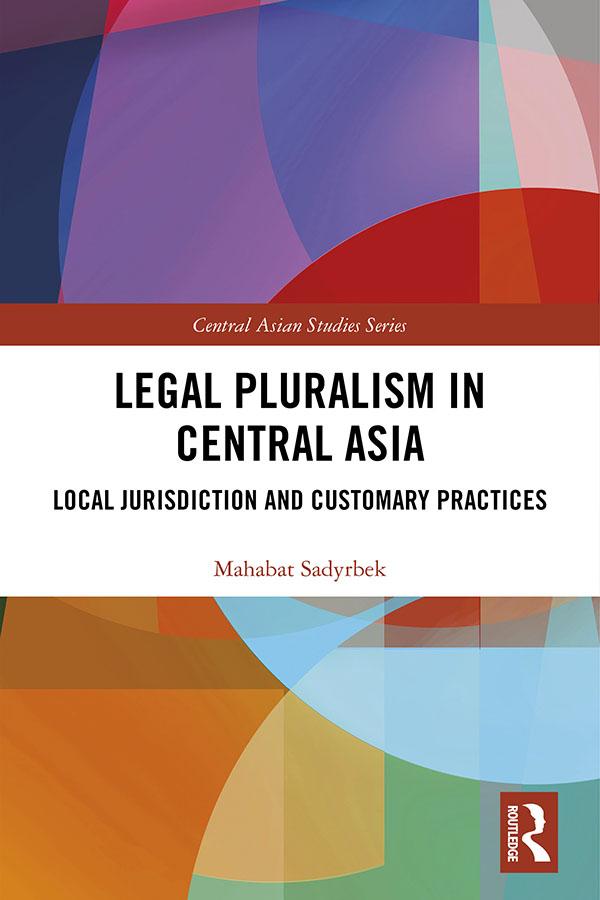
Legal Pluralism in Central Asia reports on historical, anthropological and legal research which examines customary legal practices in Kyrgyzstan and relates them to wider societal developments in Central Asia and further afield. Using the term legal pluralism, the book demonstrates that there is a spectrum of approaches, available avenues, forms of local law and indigenous popular justice in Kyrgyzstan’s predominantly rural communities, which can be labelled living law. Based on her extensive original research, Mahabat Sadyrbek shows how contemporary peoples systematically address challenging problems, such as disputes, violence, accidents, crime and other difficulties, and thereby seek justice, redress, punishment, compensation, readjustment of relations or closure. She demonstrates that local law, expressed through ritually structured communicative exchange, through dictums and proverbs with binding characters and different legal practices or processes undertaken in specific ways, deem the solutions appropriate and acceptable. The reader is thereby enabled to see the law in people’s deepest assumptions and beliefs, in codes of shame and honour, in local mores and ethics as well as in religious terms. In this way, the book reveals the dynamic, changing and living character of law in a specific context and in a region hitherto insufficiently researched within legal anthropology.
Betal nemt med kort, Klarna, Apple Pay eller Google Pay. Ikke tilfreds? Du har altid 14 dages fortrydelsesret. Læs mere i vores vilkår. Har du spørgsmål, så send os en mail på hello@memmo.org.
Memmo gør det nemmere at studere – uanset hvor du er i verden. Hos os samler du dine kursusbøger og smarte studieværktøjer ét sted: resuméer, quizzer, podcasts og flashcards. Og så er der Ted, din studieven, der svarer på alt, du undrer dig over. Over 50 000 studerende studerer allerede her – bygget til at hjælpe dig med at lære hurtigere og stresse mindre.