
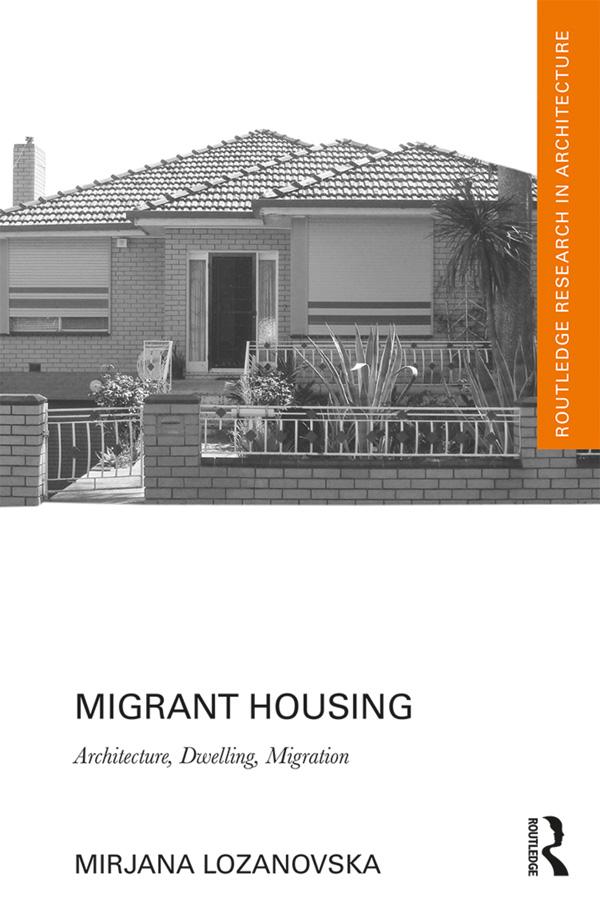
Migrant Housing, the latest book by author Mirjana Lozanovska, examines the house as the architectural construct in the processes of migration. Housing is pivotal to any migration story, with studies showing that migrant participation in the adaptation or building of houses provides symbolic materiality of belonging and the platform for agency and productivity in the broader context of the immigrant city. Migration also disrupts the cohesion of everyday dwelling and homeland integral to housing, and the book examines this displacement of dwelling and its effect on migrant housing.
This timely volume investigates the poetic and political resonance between migration and architecture, challenging the idea of the ‘house’ as a singular theoretical construct. Divided into three parts, Histories and theories of post-war migrant housing, House/home and Mapping migrant spaces of home, it draws on data studies from Australia and Macedonia, with literature from Canada, Sweden and Germany, to uncover the effects of unprivileged post-war migration in the late twentieth century on the house as architectural and normative model, and from this perspective negotiates the disciplinary boundaries of architecture.
Betal nemt med kort, Klarna, Apple Pay eller Google Pay. Ikke tilfreds? Du har altid 14 dages fortrydelsesret. Læs mere i vores vilkår. Har du spørgsmål, så send os en mail på hello@memmo.org.
Memmo gør det nemmere at studere – uanset hvor du er i verden. Hos os samler du dine kursusbøger og smarte studieværktøjer ét sted: resuméer, quizzer, podcasts og flashcards. Og så er der Ted, din studieven, der svarer på alt, du undrer dig over. Over 50 000 studerende studerer allerede her – bygget til at hjælpe dig med at lære hurtigere og stresse mindre.