
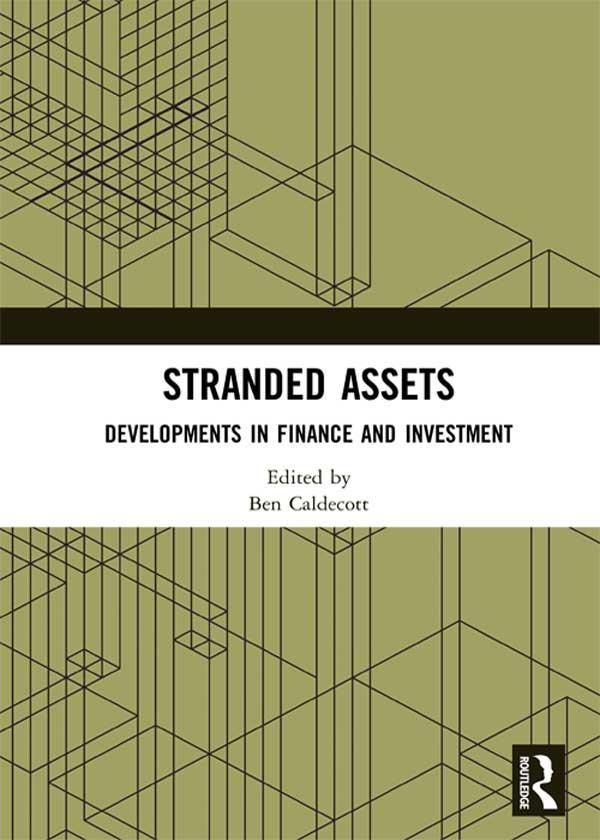
The topic of ‘stranded assets’ created by environment-related risk factors has risen up the agenda dramatically, influencing many pressing topics in relation to global environmental change. For example: how best to manage the exposure of investments to environment-related risks so that financial institutions can avoid stranded assets; the financial stability implications of stranded assets and what this means for macroprudential regulation, microprudential regulation, and financial conduct; reducing the negative consequences of stranded assets by finding ways to address unemployment, lost profits, and reduced tax income; internalising the risk of stranded assets in corporate strategy and decision-making, particularly in carbon intensive sectors susceptible to the effects of societal action on climate change; underpinning arguments by civil society campaigns attempting to secure rapid decarbonisation to reduce the scale of anthropogenic climate change; and designing decarbonisation plans developed by governments, as well as companies and investors.
Taken as a whole, this book provides some of the latest thinking on how stranded assets are relevant to investor strategy and decision-making, as well as those seeking to understand and influence financial institutions. This book was originally published as a special issue of the Journal of Sustainable Finance and Investment.
Betal nemt med kort, Klarna, Apple Pay eller Google Pay. Ikke tilfreds? Du har altid 14 dages fortrydelsesret. Læs mere i vores vilkår. Har du spørgsmål, så send os en mail på hello@memmo.org.
Memmo gør det nemmere at studere – uanset hvor du er i verden. Hos os samler du dine kursusbøger og smarte studieværktøjer ét sted: resuméer, quizzer, podcasts og flashcards. Og så er der Ted, din studieven, der svarer på alt, du undrer dig over. Over 50 000 studerende studerer allerede her – bygget til at hjælpe dig med at lære hurtigere og stresse mindre.