
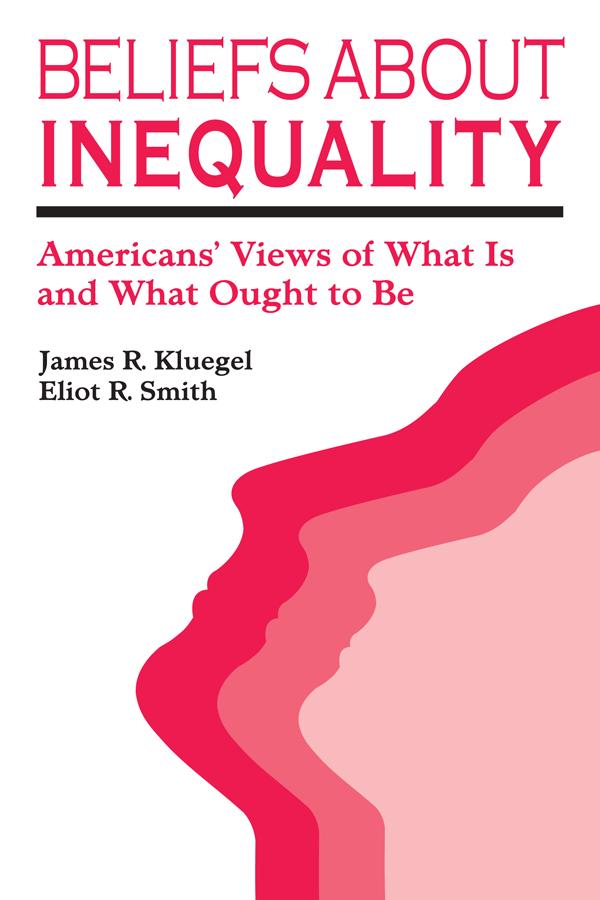
Motivated by the desire to explain how Americans perceive and evaluate inequality and related programs and policies, the authors conducted a national survey of beliefs about social and economic inequality in America. Here they present the results of their research on the structure, determinants, and certain political and personal consequences of these beliefs. The presentations serve two major goals; to describe and explain the central features of Americans' images of inequality. Beliefs About Inequality begins with a focus on people's perceptions of the most basic elements of inequality: the availability of opportunity in society, the causes of economic achievements, and the benefits and costs of equality and inequality. The book's analysis of the public's beliefs on these key issues is based on fundamental theories of social psychology and lays the groundwork for understanding how Americans evaluate inequality-related policies. The authors discuss the ultimate determinants of beliefs and the implications of their findings for social policies related to inequality. They propose that attitudes toward economic inequality and related policy are influenced by three major aspects of the current American social, economic, and political environment: a stable "dominant ideology" about economic inequality; individuals' social and economic status; and specific beliefs and attitudes, often reflecting "social liberalism" shaped by recent political debates and events.
Betal nemt med kort, Klarna, Apple Pay eller Google Pay. Ikke tilfreds? Du har altid 14 dages fortrydelsesret. Læs mere i vores vilkår. Har du spørgsmål, så send os en mail på hello@memmo.org.
Memmo gør det nemmere at studere – uanset hvor du er i verden. Hos os samler du dine kursusbøger og smarte studieværktøjer ét sted: resuméer, quizzer, podcasts og flashcards. Og så er der Ted, din studieven, der svarer på alt, du undrer dig over. Over 50 000 studerende studerer allerede her – bygget til at hjælpe dig med at lære hurtigere og stresse mindre.