
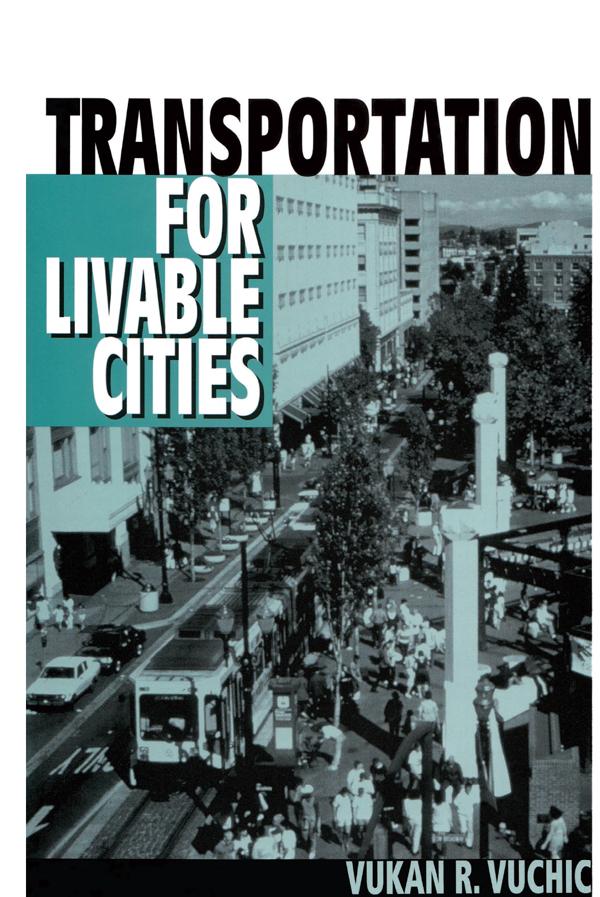
The twenty-first century finds civilization heavily based in cities that have grown into large metropolitan areas. Many of these focal points of human activity face problems of economic inefficiency, environmental deterioration, and an unsatisfactory quality of life—problems that go far in determining whether a city is "livable." A large share of these problems stems from the inefficiencies and other impacts of urban transportation systems.
The era of projects aimed at maximizing vehicular travel is being replaced by the broader goal of achieving livable cities: economically efficient, socially sound, and environmentally friendly. This book explores the complex relationship between transportation and the character of cities and metropolitan regions. Vukan Vuchic applies his experience in urban transportation systems and policies to present a systematic review of transportation modes and their characteristics.
Transportation for Livable Cities dispels the myths and emotional advocacies for or against freeways, rail transit, bicycles,and other modes of transportation. The author discusses the consequences of excessive automobile dependence and shows that the most livable cities worldwide have intermodal systems that balance highway and public transit modes while providing for pedestrians, bicyclists, and paratransit. Vuchic defines the policies necessary for achieving livable cities: the effective implementation of integrated intermodal transportation systems.
Betal nemt med kort, Klarna, Apple Pay eller Google Pay. Ikke tilfreds? Du har altid 14 dages fortrydelsesret. Læs mere i vores vilkår. Har du spørgsmål, så send os en mail på hello@memmo.org.
Memmo gør det nemmere at studere – uanset hvor du er i verden. Hos os samler du dine kursusbøger og smarte studieværktøjer ét sted: resuméer, quizzer, podcasts og flashcards. Og så er der Ted, din studieven, der svarer på alt, du undrer dig over. Over 50 000 studerende studerer allerede her – bygget til at hjælpe dig med at lære hurtigere og stresse mindre.