
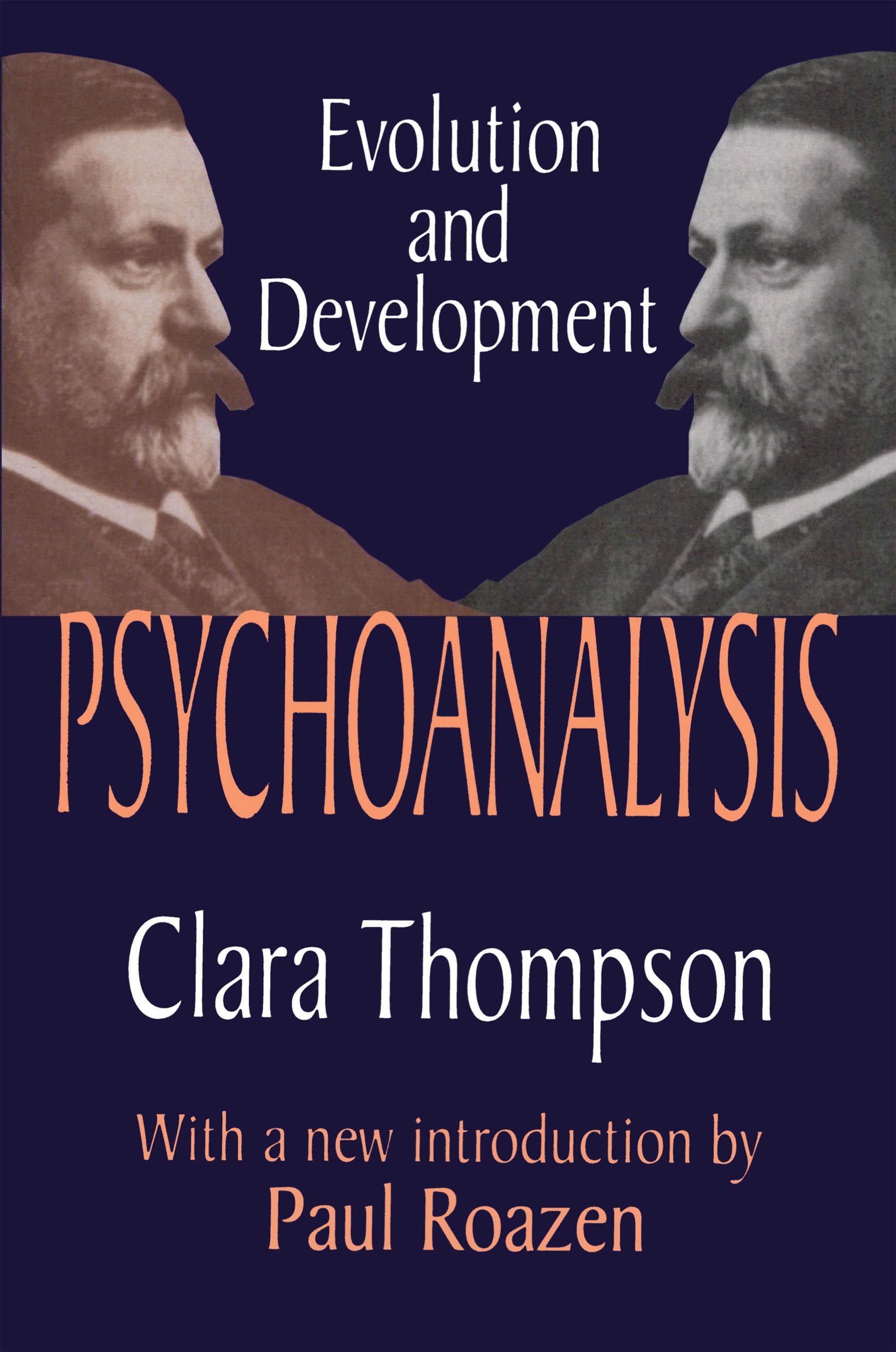
Clara Thompson was a leading representative of the cultural interpersonal school of psychoanalysis, sometimes known as the "neo-Freudians," which included Karen Horney, Erich Fromm, and Harry Stack Sullivan. "Classical analysts" once viewed neo-Freudians with the greatest suspicion and mistrust, yet today they can be seen for the innovative group of thinkers they were. Thompson's Psychoanalysis: Evolution and Development, first published in 1950, remains an enormously fair-minded discussion of the history of psychoanalytic theory and therapy.
Psychoanalysis has always been a theory of personality as well as a technique of therapy. Since Freud was born in 1856, and was an outstanding representative of the culture of old Vienna, Thompson thought there was plenty of room for revising classical analytic thinking in light of later developments. Such revisionism, she believed, need not lose the essential appreciation of the dynamic unconscious within classical analysis. However, Thompson felt Freud's biological outlook needed to be supplemented by a culturally more sophisticated orientation, and she was among those who tried to put Freud's concepts of libido into historical perspective. Instead of psychoanalysis having as its objective the release of tensions, Thompson proposed that the goal of analysis ought to be the growth of the total personality. Her revisionism also meant that the scope of psychoanalytic treatment could be broadened well beyond the neuroses Freud sought to explain. Thompson well understood the impact of the social environment on character formation.
The psychology of women needed to be rethought; differences between men and women could be partly explained by the social expectations that traditional Western culture had imposed on them. Thompson believed the whole analyst-patient relationship needed to be rethought; the real personality of the therapist has to be acknowledged, and the full human interplay between patient and analyst required examination.
In the current positivistic therapeutic climate based on technological advances in psychopharmacology, the ethical and humanistic dimension may be lost. Reflecting on the work of Clara Thompson and the neo-Freudian school can remind us of earlier efforts to challenge therapeutic authority and their distinct relevance to our problems today.
Betal nemt med kort, Klarna, Apple Pay eller Google Pay. Ikke tilfreds? Du har altid 14 dages fortrydelsesret. Læs mere i vores vilkår. Har du spørgsmål, så send os en mail på hello@memmo.org.
Memmo gør det nemmere at studere – uanset hvor du er i verden. Hos os samler du dine kursusbøger og smarte studieværktøjer ét sted: resuméer, quizzer, podcasts og flashcards. Og så er der Ted, din studieven, der svarer på alt, du undrer dig over. Over 50 000 studerende studerer allerede her – bygget til at hjælpe dig med at lære hurtigere og stresse mindre.