
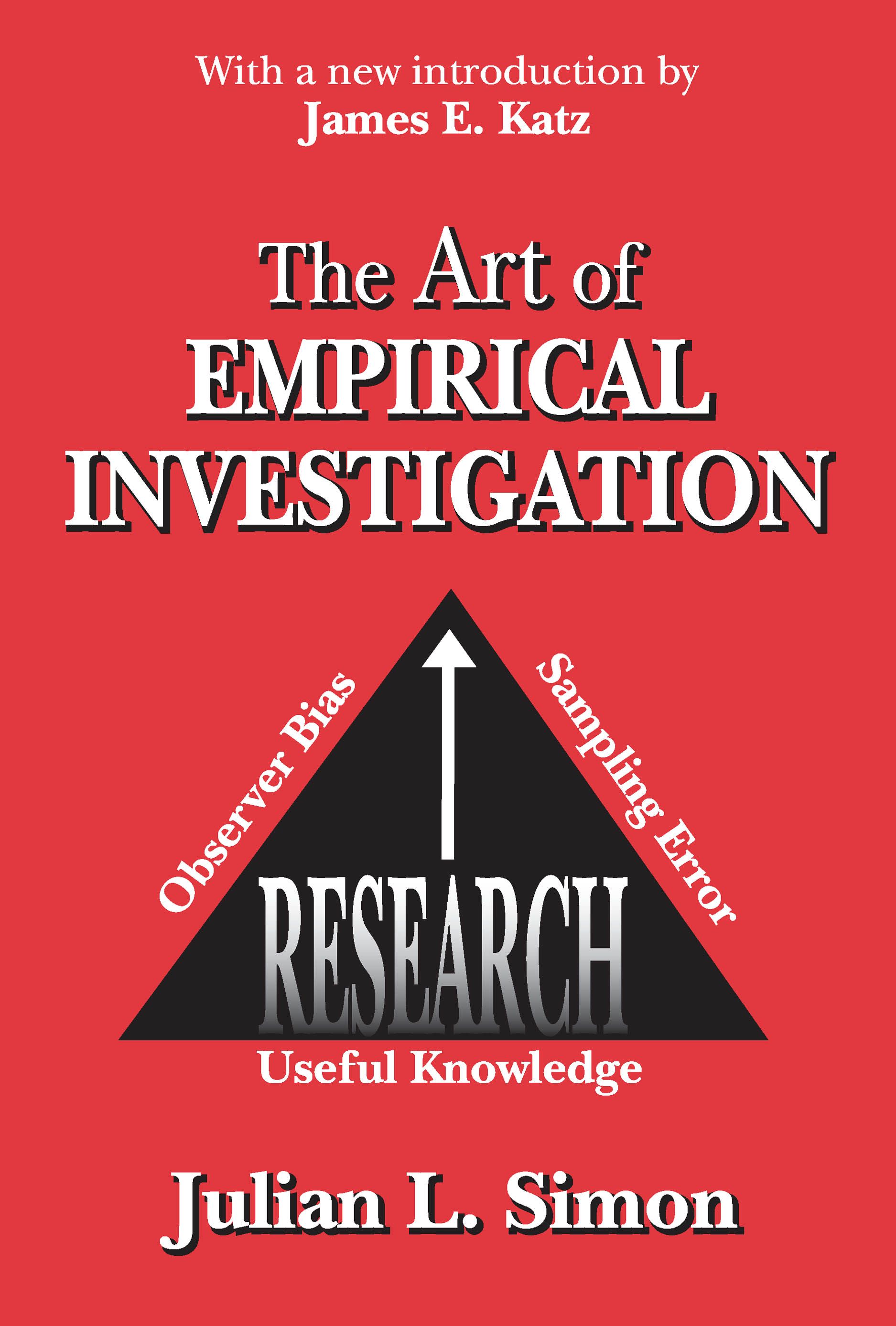
Julian Simon was known for his methodical, and often controversial, writings challenging conventional beliefs about overpopulation, pollution, disappearing farmland, and the scarcity of energy sources and raw materials. But throughout his works is a common theme: that responsible, unbiased research and examination of the data is indispensable to formulating a well-informed and accurate opinion. The Art of Empirical Investigation teaches student, professor, researcher, and those interested in ascertaining the truth about social issues just how to proceed.
The Art of Empirical Investigation is a textbook on the basics of social-scientific research. It discusses all the important empirical methods used in social science, and its examples, drawn from a wide variety of academic and applied fields, illustrate the use of each method in its most appropriate context. The actual decisions a researcher must make at every stage of a project are emphasized, as well as obstacles to knowledge--such as observer bias, deception, unreliability of data, and sampling costs--and how to overcome them. Presupposing nothing, the book introduces the reader to the foundations of empirical social-science research, regardless of a specific field. It also makes an important contribution to beginning researchers' understanding of an operational definition of causality, which cuts through philosophical obscurity and teaches the researcher how to decide whether or not a given relationship is causal.
Betal nemt med kort, Klarna, Apple Pay eller Google Pay. Ikke tilfreds? Du har altid 14 dages fortrydelsesret. Læs mere i vores vilkår. Har du spørgsmål, så send os en mail på hello@memmo.org.
Memmo gør det nemmere at studere – uanset hvor du er i verden. Hos os samler du dine kursusbøger og smarte studieværktøjer ét sted: resuméer, quizzer, podcasts og flashcards. Og så er der Ted, din studieven, der svarer på alt, du undrer dig over. Over 50 000 studerende studerer allerede her – bygget til at hjælpe dig med at lære hurtigere og stresse mindre.