
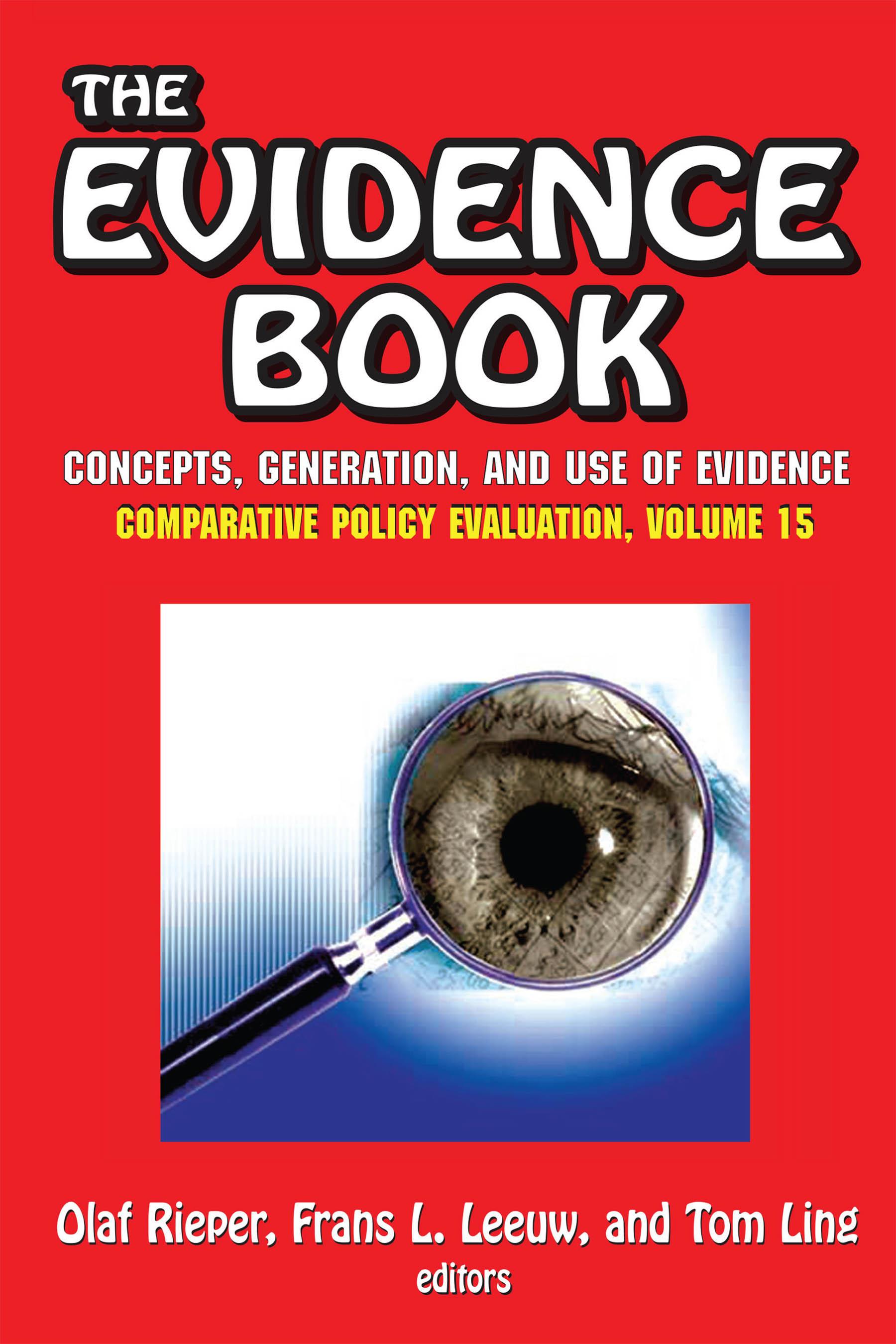
Knowledge grows as ideas are tested against each other. Agreement is not resolved simply by naming concepts but in the dialectical process of thesis, antithesis, and synthesis. There are many echoes of these debates in The Evidence Book. The contributors make claims for both practitioner wisdom and the voice of experience. Against this is posed the authority of experimental science and the randomized controlled trial.The contributors are concerned, in their own ways, with collecting, ranking, and analyzing evidence and using this to deliver evaluations. As an expert group, they are aware that the concept of evidence has been increasingly important in the last decade. As with other concepts, it too often escapes precise definition. Despite this, the growing importance of evidence has been advocated with enthusiasm by supporters who see it as a way of increasing the effectiveness and quality of decisions and of professional life.The willingness to engage in evidence-based policy and the means to do so is heavily constrained by economic, political, and cultural climates. This book is a marvelously comprehensive and utterly unique treatise on evidence-based policy. It is a wide-ranging contribution to the field of evaluation.
Betal nemt med kort, Klarna, Apple Pay eller Google Pay. Ikke tilfreds? Du har altid 14 dages fortrydelsesret. Læs mere i vores vilkår. Har du spørgsmål, så send os en mail på hello@memmo.org.
Memmo gør det nemmere at studere – uanset hvor du er i verden. Hos os samler du dine kursusbøger og smarte studieværktøjer ét sted: resuméer, quizzer, podcasts og flashcards. Og så er der Ted, din studieven, der svarer på alt, du undrer dig over. Over 50 000 studerende studerer allerede her – bygget til at hjælpe dig med at lære hurtigere og stresse mindre.
Du kan måske også lide
Køb bogen0