
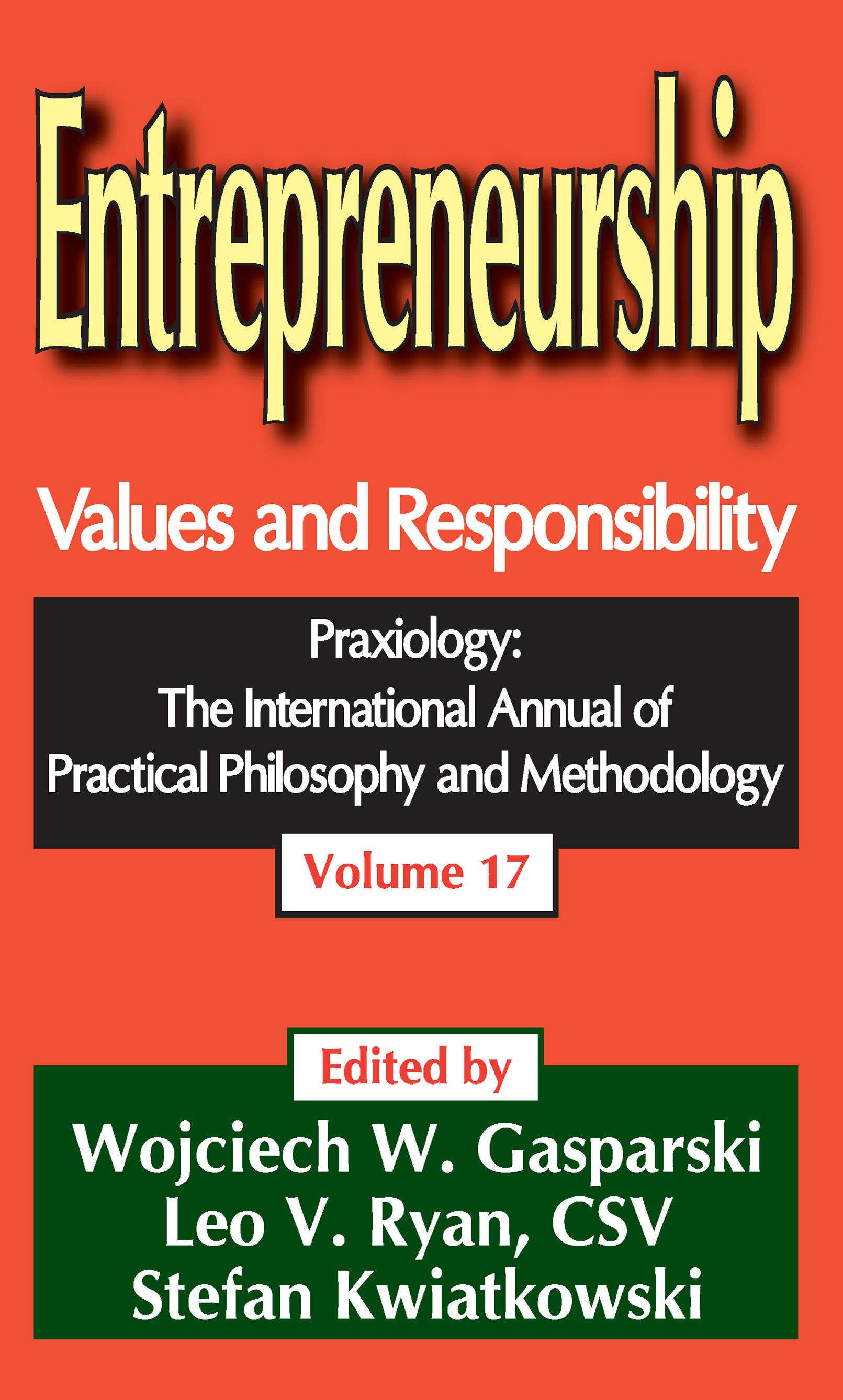
Entrepreneurship is the capability to be an entrepreneur. Beyond that idea is an ideology that a person's business actions result in industrial growth or technical advances, making that person a leader in the economic world. The contributors to this latest volume in the Praxiology Series, now available in paperback, are united in claiming that resourcefulness is a characteristic of people who take effective action, and that effectiveness is dependent on good, ethical purposes.
The wide-angle definition of entrepreneurship presented in this volume demands that people and organizations engage in more than simple self-interest, but also display awareness of the prospects for wider growth and advances resulting from their decisions. In a period of financial crisis caused by irresponsible behavior by eminent would-be "entrepreneurs" the significance of this perspective should be evident. The editors claim that growth, not stagnation, advantage, not decline, are irreversible traits of business activity. This is why the very concept of entrepreneurship calls for values and responsibility—even more than in the past.
The contributors develop the idea of entrepreneurship from both theoretical approaches religious and practical, or applied perspectives. This inter- and multidisciplinary approach offers readers a chance to rebuild trust in entrepreneurship.
Betal nemt med kort, Klarna, Apple Pay eller Google Pay. Ikke tilfreds? Du har altid 14 dages fortrydelsesret. Læs mere i vores vilkår. Har du spørgsmål, så send os en mail på hello@memmo.org.
Memmo gør det nemmere at studere – uanset hvor du er i verden. Hos os samler du dine kursusbøger og smarte studieværktøjer ét sted: resuméer, quizzer, podcasts og flashcards. Og så er der Ted, din studieven, der svarer på alt, du undrer dig over. Over 50 000 studerende studerer allerede her – bygget til at hjælpe dig med at lære hurtigere og stresse mindre.