
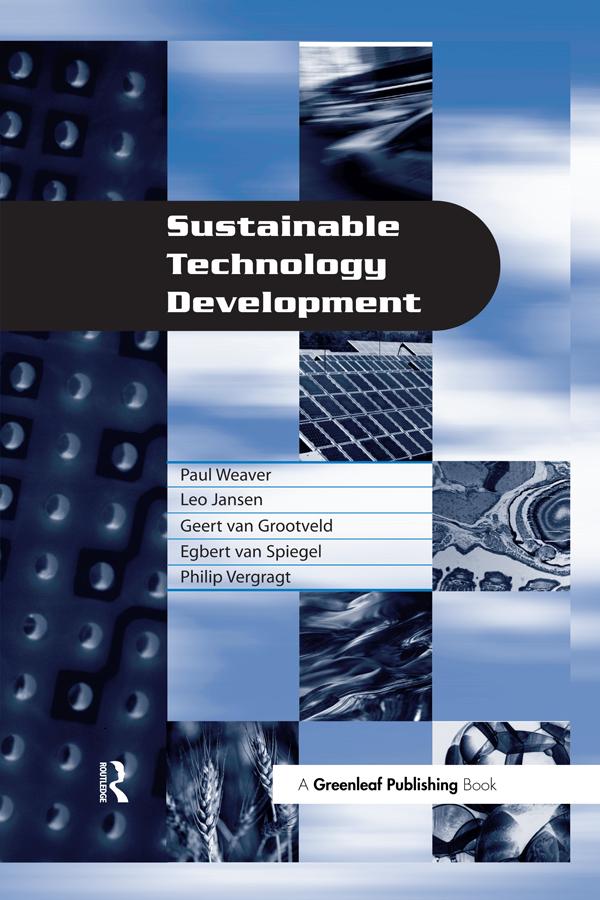
In the time it takes to read this sentence, about fifteen people will be added to the world's population. Read the sentence again, and there will be thirty. Tomorrow, each of these people will be demanding greater prosperity. Production and consumption are increasing fast but will have to grow even faster in the future to keep up with population growth and a world increasingly divided by inequality. How should we react to these trends? Certainly, many use growth figures to forecast disaster. But there is an alternative vision: one of a sustainable future, in which growth is seen not as a threat, but as the driving force behind innovation. This is the scenario worked out in the Netherlands by Sustainable Technology Development (STD), a five-year programme of research and "learning-by-doing" based on setting up new innovation networks and working with new methods to search for sustainable technological solutions. In order to make sustainability tangible, STD made a leap in time. What human needs will have to be satisfied fifty years from now? Taking a sustainable future vision as a starting point, STD demonstrated what steps we should take today for new technologies and systems to be in place in time. These results are now available for the first time in a comprehensive, specifically written English-language book, together with a description of the unique working method of STD and the results and key lessons from a set of the programme's illustrative case studies. This book serves as a manual for industry, governments and social leaders wanting to prepare themselves for a sustainable future. Sustainable Technology Development sets out the programme's underpinning philosophy and describes its approach, methods and findings. Delivering sustainability means finding ways to meet human needs using a fraction of the natural resources we use today. The world's richer nations would be wise to target at least ten-fold improvements by 2050 in the productivity with which conventional natural resources and environmental services are used. And they need to bring new, sustainable resources on-stream to augment the resource base and replace the use of unsustainable alternatives. Sustainable Technology Development marks a significant contribution to our understanding of innovation processes and how these might be influenced in favour of sustainable technology development. In principle, technology could play a pivotal role in sustainable development. Whether it does or not depends on whether innovators can be encouraged to make this an explicit goal, adopt long-term time-horizons and search for renewable technologies. Given the long lead-times involved, there is no time to waste in beginning the search. The STD programme has begun to make inroads into one of the most urgent of all needs concerning sustainable development: that for innovation in the innovation process itself.
Betal nemt med kort, Klarna, Apple Pay eller Google Pay. Ikke tilfreds? Du har altid 14 dages fortrydelsesret. Læs mere i vores vilkår. Har du spørgsmål, så send os en mail på hello@memmo.org.
Memmo gør det nemmere at studere – uanset hvor du er i verden. Hos os samler du dine kursusbøger og smarte studieværktøjer ét sted: resuméer, quizzer, podcasts og flashcards. Og så er der Ted, din studieven, der svarer på alt, du undrer dig over. Over 50 000 studerende studerer allerede her – bygget til at hjælpe dig med at lære hurtigere og stresse mindre.
Du kan måske også lide
Køb bogen0