
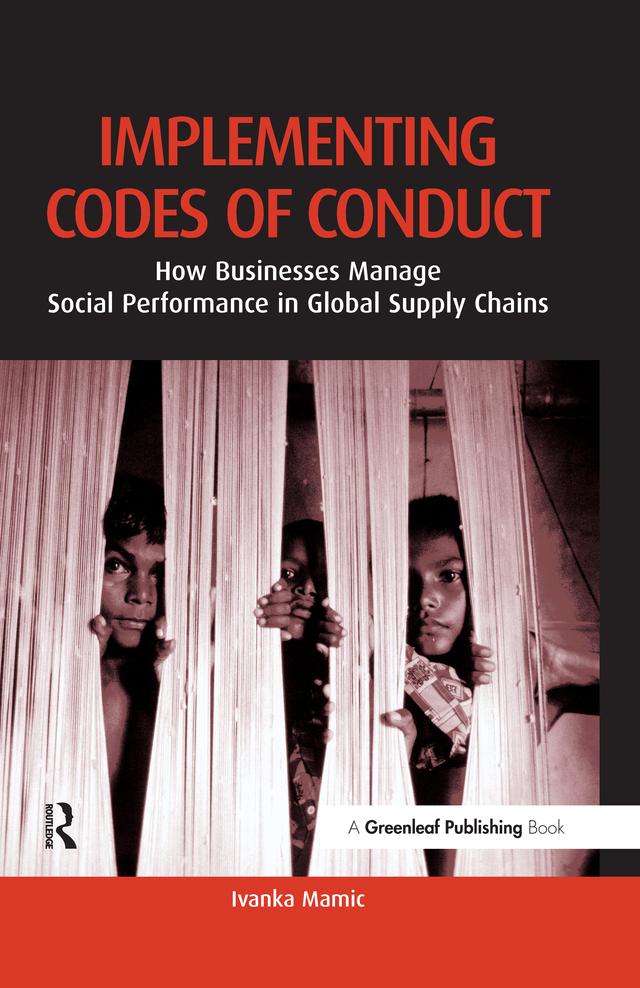
At the start of the 21st century manufacturing is in the midst of a major transformation, with goods moving from factories in São Paulo, Ho Chi Minh and Guanzhou to the shelves of stores in New York, Hamburg and Sydney. As production of goods has become increasingly global, with an impact on workers and societies around the world, the ILO has sought to answer the challenging question: how best to implement voluntary corporate initiatives in value chains that stretch around the globe from a constantly changing supply base of factories both large and small?
In order to address growing pressures from stakeholders, a number of global companies have adopted codes of conduct with the aim of influencing the practices of their suppliers in less-developed countries and providing a baseline of expected standards. Typically, codes of conduct draw on international labour standards, setting guidelines on a range of issues, including child labour, forced labour, wages and benefits, working hours, disciplinary practices, the right to freedom of association, health and safety, and environmental practices. Notwithstanding the array of initiatives that has emerged, anecdotal evidence suggests that, in many cases, managers both at the company and supplier level have struggled and continue to struggle with the issue of how to implement their codes of conduct.
Based on interviews with hundreds of managers, activists, government officials, factory workers and workers' representatives, Implementing Codes of Conduct represents the most extensive research conducted to date into the emerging nature of corporate social responsibility and global supply chains. Its objective is to provide useful examples and lessons learned to companies, policy-makers and others interested in implementing their own code of conduct or who are actively involved in this field.
This book has broad implications for firms that are serious about seeing the social and environmental objectives expressed in their corporate codes become a reality at the supplier level – implications that stretch from the boardroom to the factory floor. The book presents a model that maps a route from the creation of a vision to its implementation at the operational level. Based on research conducted in the sports footwear, apparel and retail sectors, this book provides a detailed account of the approaches currently used by leading brands and retailers and practical suggestions for other companies to follow in addressing social pressures.
Given an increasingly clear link between corporate social responsibility and profits, this book serves as an invaluable tool in assisting those interested in balancing the complex demands of society and competitive concerns.
Betal nemt med kort, Klarna, Apple Pay eller Google Pay. Ikke tilfreds? Du har altid 14 dages fortrydelsesret. Læs mere i vores vilkår. Har du spørgsmål, så send os en mail på hello@memmo.org.
Memmo gør det nemmere at studere – uanset hvor du er i verden. Hos os samler du dine kursusbøger og smarte studieværktøjer ét sted: resuméer, quizzer, podcasts og flashcards. Og så er der Ted, din studieven, der svarer på alt, du undrer dig over. Over 50 000 studerende studerer allerede her – bygget til at hjælpe dig med at lære hurtigere og stresse mindre.