
The PathFinder Lab Journal Field Notebook (Appendix III) is available here.
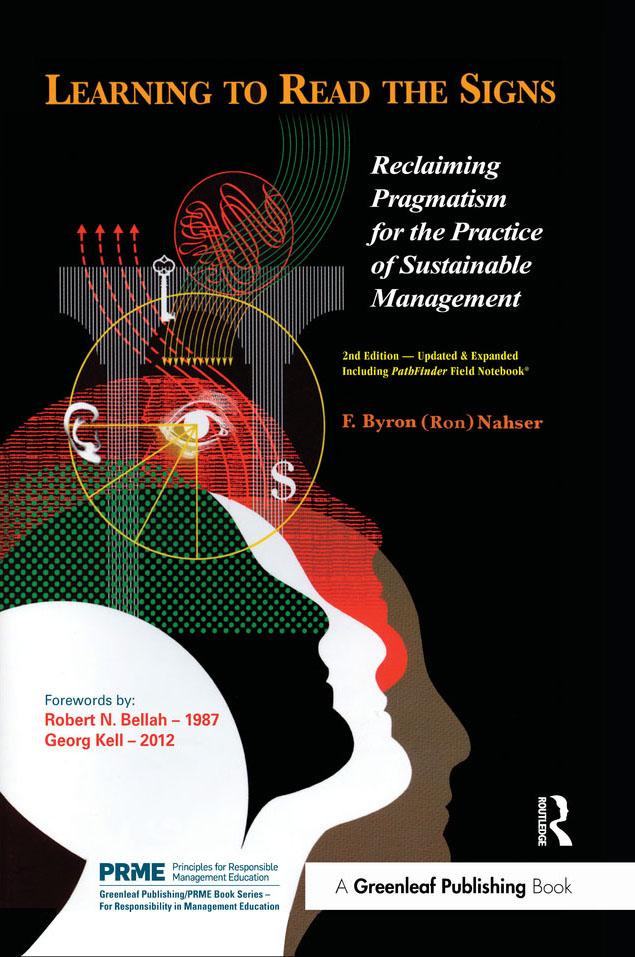
It's not what we know, but how we learn. This is the key that Learning to Read the Signs uses in order to evaluate and apply ideas and facts to one's organization life. The book asks the reader to go back to and reclaim pragmatism: an activity of thought involving four parts: Investigation, Hypothesis, Action, and Testing. Pragmatism is a method of interpretation or inquiry which offers to the thoughtful business practitioner a way to better understand the reality in which we operate, to think critically and creatively, and for business people to think together to make the best use of all our perspectives and talents. Questions raised in this book include: What are the signs telling us? Where are we headed and why? Why are things going the way they are? What is our purpose?
Examples abound of companies and organizations that have failed to "read the signs": the automobile and the financial services industries are obvious examples. Doing business successfully in the 21st century means becoming aware of the filters that modify and limit business vision in our culture. Without this awareness, many businesses will continue to fall into short-term reactive thinking. In a world facing unprecedented social, environmental, and economic challenges, learning to read the signs is a business imperative. This is not a how-to book in the sense that it provides ten easy answers to everyday business problems. The help it gives is much more profound. This book outlines a mode of inquiry that can be used to solve cognitive as well as ethical questions. Drawing on the deepest resources of philosophical pragmatism, Nahser shows us that often we do not even know the right question to ask, that we must start by trusting our doubts and seeing where they lead, so that we can even begin to ask the right questions. He brings philosophy down to earth by showing that a practical philosophy can call into question our outworn assumptions, open up new lines in inquiry, and lead to conclusions we never imagined at the beginning of the process – conclusions not just about what to do next, but about our larger purposes, those frameworks that give us meaning and direction. In this long-overdue and radical update to his seminal book, Ron Nahser turns his attention to how pragmatism can be can be practiced by the management of business, government, and non-profit organizations to create both success and a better world for all.
Betal nemt med kort, Klarna, Apple Pay eller Google Pay. Ikke tilfreds? Du har altid 14 dages fortrydelsesret. Læs mere i vores vilkår. Har du spørgsmål, så send os en mail på hello@memmo.org.
Memmo gør det nemmere at studere – uanset hvor du er i verden. Hos os samler du dine kursusbøger og smarte studieværktøjer ét sted: resuméer, quizzer, podcasts og flashcards. Og så er der Ted, din studieven, der svarer på alt, du undrer dig over. Over 50 000 studerende studerer allerede her – bygget til at hjælpe dig med at lære hurtigere og stresse mindre.