
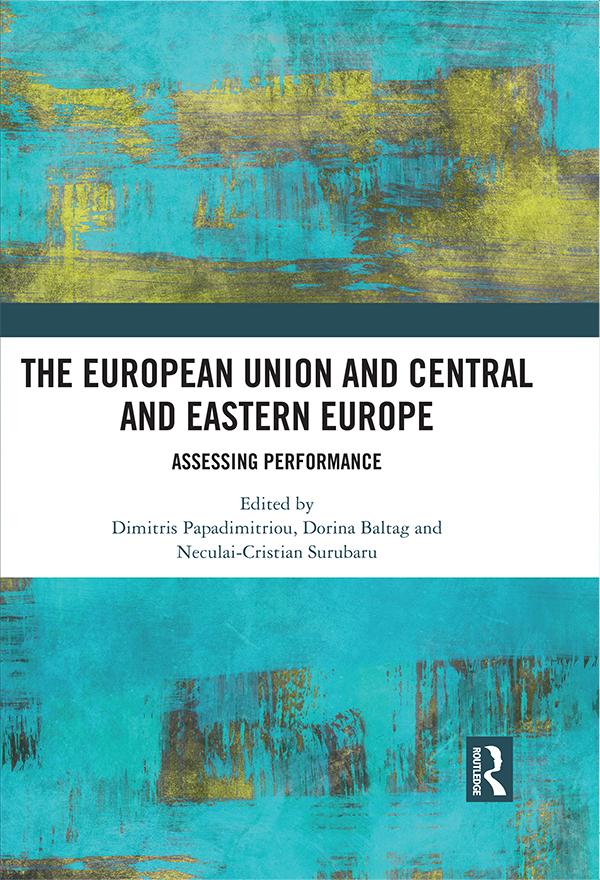
The role of the European Union (EU) in Central and Eastern European countries (CEECs) and its ‘near abroad’ has attracted much scholarly attention over the past few years. Notwithstanding the successes of the EU’s eastwards enlargement, the ‘transformative power’ of the EU in the region has often been called into question, both in terms of its depth and longevity. This book addresses a number of key questions: What determines EU performance in post-communist Europe? What are the conditions that influence it? How does the projection of EU power differ between its enlargement policy and the European Neighbourhood policy? To answer these questions this volume brings together a wide range of case studies, based on different approaches and methods, but with a single analytical focus on ‘performance’. The book’s coverage and focus will be of interest to academics, practitioners and students interested in the EU, CEECs, pre- and post-enlargement studies and more widely to those interested in the international relations and the governance of wider Eastern Europe.
The chapters of this book were originally published as a special issue of East European Politics.
Betal nemt med kort, Klarna, Apple Pay eller Google Pay. Ikke tilfreds? Du har altid 14 dages fortrydelsesret. Læs mere i vores vilkår. Har du spørgsmål, så send os en mail på hello@memmo.org.
Memmo gør det nemmere at studere – uanset hvor du er i verden. Hos os samler du dine kursusbøger og smarte studieværktøjer ét sted: resuméer, quizzer, podcasts og flashcards. Og så er der Ted, din studieven, der svarer på alt, du undrer dig over. Over 50 000 studerende studerer allerede her – bygget til at hjælpe dig med at lære hurtigere og stresse mindre.