
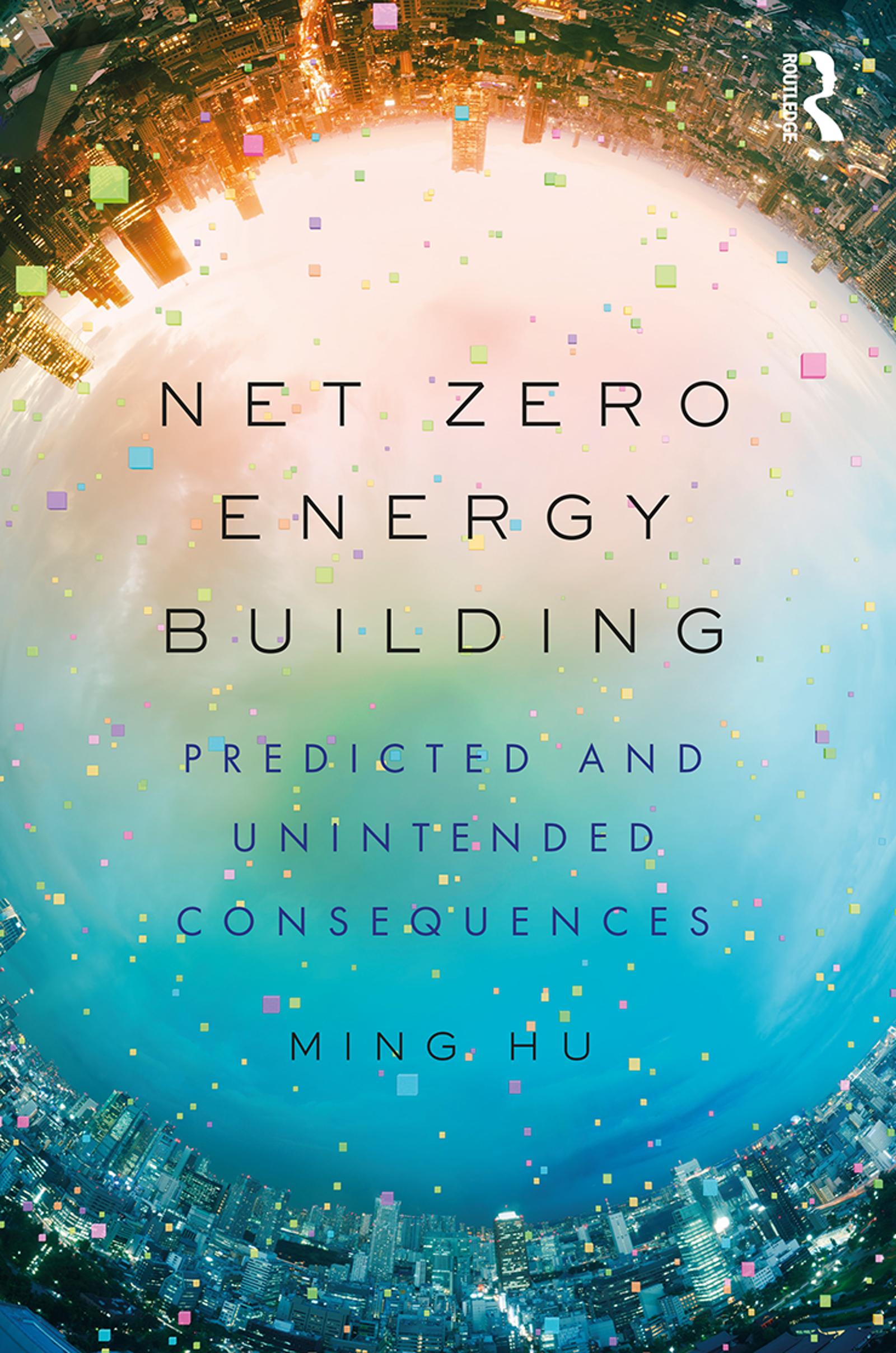
What do we mean by net zero energy? Zero operating energy? Zero energy costs? Zero emissions? There is no one answer: approaches to net zero building vary widely across the globe and are influenced by different environmental and cultural contexts.
Net Zero Energy Building: Predicted and Unintended Consequences presents a comprehensive overview of variations in 'net zero' building practices. Drawing on examples from countries such as the United States, United Kingdom, Germany, Japan, Hong Kong, and China, Ming Hu examines diverse approaches to net zero and reveals their intended and unintended consequences.
Existing approaches often focus on operating energy: how to make buildings more efficient by reducing the energy consumed by climate control, lighting, and appliances. Hu goes beyond this by analyzing overall energy consumption and environmental impact across the entire life cycle of a building—ranging from the manufacture of building materials to transportation, renovation, and demolition. Is net zero building still achievable once we look at these factors?
With clear implications for future practice, this is key reading for professionals in building design, architecture, and construction, as well as students on sustainable and green architecture courses.
Betal nemt med kort, Klarna, Apple Pay eller Google Pay. Ikke tilfreds? Du har altid 14 dages fortrydelsesret. Læs mere i vores vilkår. Har du spørgsmål, så send os en mail på hello@memmo.org.
Memmo gør det nemmere at studere – uanset hvor du er i verden. Hos os samler du dine kursusbøger og smarte studieværktøjer ét sted: resuméer, quizzer, podcasts og flashcards. Og så er der Ted, din studieven, der svarer på alt, du undrer dig over. Over 50 000 studerende studerer allerede her – bygget til at hjælpe dig med at lære hurtigere og stresse mindre.