
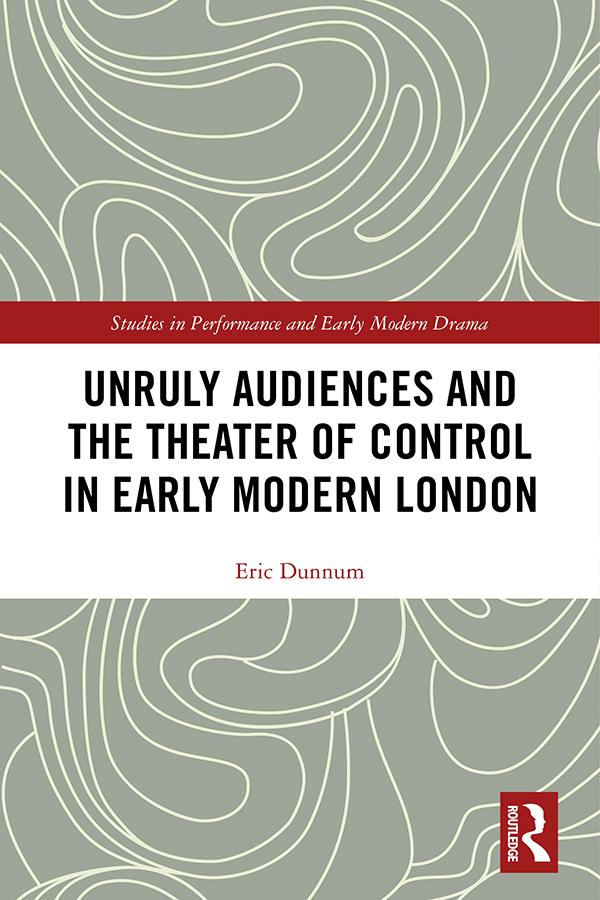
Unruly Audiences and the Theater of Control in Early Modern London explores the effects of audience riots on the dramaturgy of early modern playwrights, arguing that playwrights from Marlowe to Brome often used their plays to control the physical reactions of their audience.
This study analyses how, out of anxiety that unruly audiences would destroy the nascent industry of professional drama in England, playwrights sought to limit the effect that their plays could have on the audience. They tried to construct playgoing through their drama in the hopes of creating a less-reactive, more pensive, and controlled playgoer. The result was the radical experimentation in dramaturgy that, in part, defines Renaissance drama.
Written for scholars of Early Modern and Renaissance Drama and Theatre, Theatre History, and Early Modern and Renaissance History, this book calls for a new focus on the local economic concerns of the theatre companies as a way to understand the motivation behind the drama of early modern London.
Betal nemt med kort, Klarna, Apple Pay eller Google Pay. Ikke tilfreds? Du har altid 14 dages fortrydelsesret. Læs mere i vores vilkår. Har du spørgsmål, så send os en mail på hello@memmo.org.
Memmo gør det nemmere at studere – uanset hvor du er i verden. Hos os samler du dine kursusbøger og smarte studieværktøjer ét sted: resuméer, quizzer, podcasts og flashcards. Og så er der Ted, din studieven, der svarer på alt, du undrer dig over. Over 50 000 studerende studerer allerede her – bygget til at hjælpe dig med at lære hurtigere og stresse mindre.