
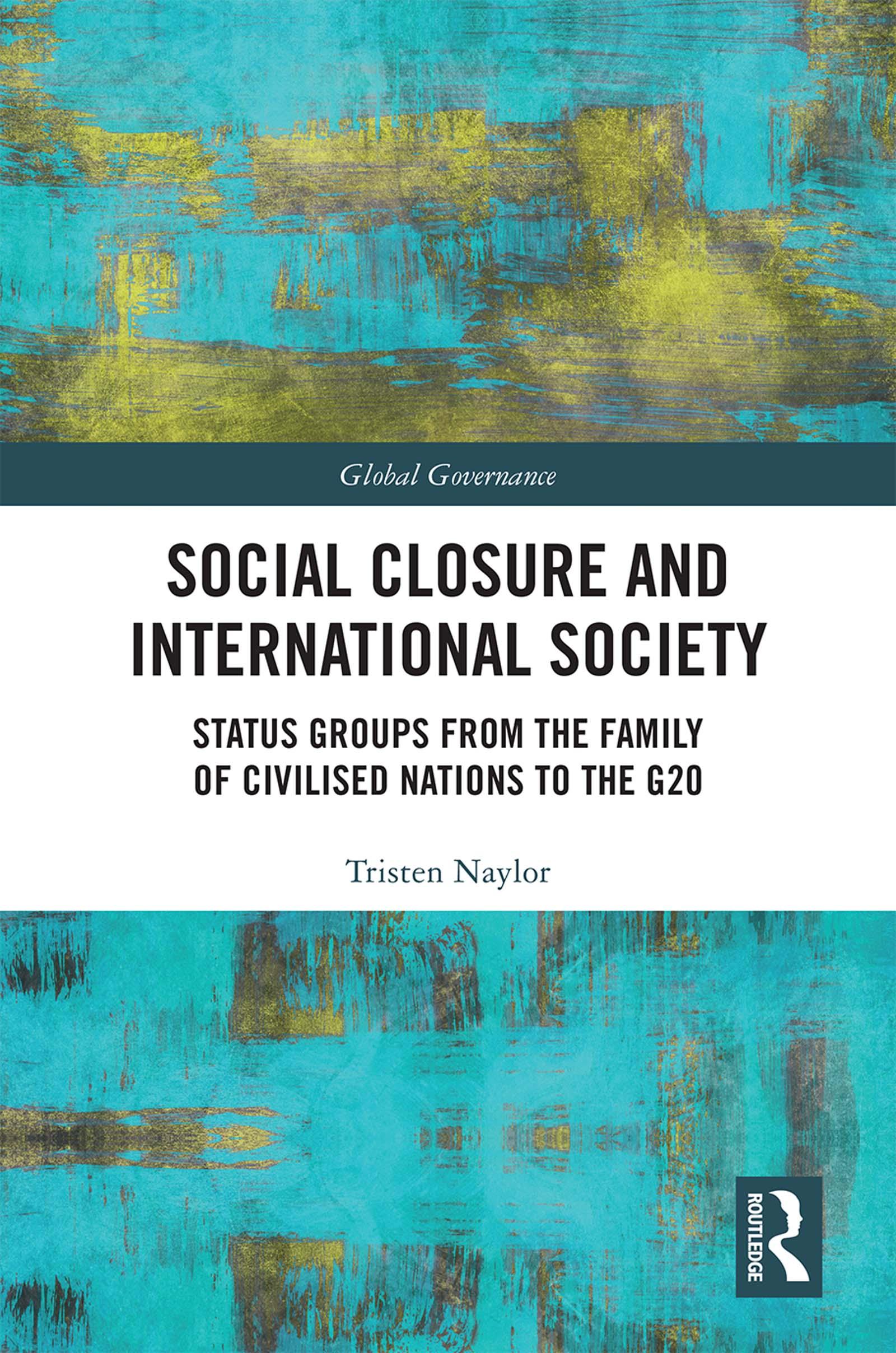
Laying the foundations of a theory of ‘international social closure’ this book examines how actors compete for a seat at the table in the management of international society and how that competition stratifies the international domain.
In a broad historical survey from the ‘Family of Civilised Nations’, through the Great Powers’ club, to the G7 and G20 today, Naylor investigates the politics of membership in the exclusive clubs that manage international society and ensure its survival, providing us with a new way to think about how status competition has changed over time and what this means for international politics today. With its sociologically grounded theory, this book advances English School scholarship and transforms the study of contemporary summitry, providing a ground-breaking approach rooted in archival research, elite interviews, and ethnographic participant observation.
This book is of interest to international relations scholars interested in the ‘expansion’ and globalisation of international society, the history of international summits, and transformations in international order, as well as to those examining concepts including stratification, hierarchy, and networked governance. With its emphasis on non-state actors in global governance, scholars and practitioners alike working on/for civil society will also find this research of great value.
Betal nemt med kort, Klarna, Apple Pay eller Google Pay. Ikke tilfreds? Du har altid 14 dages fortrydelsesret. Læs mere i vores vilkår. Har du spørgsmål, så send os en mail på hello@memmo.org.
Memmo gør det nemmere at studere – uanset hvor du er i verden. Hos os samler du dine kursusbøger og smarte studieværktøjer ét sted: resuméer, quizzer, podcasts og flashcards. Og så er der Ted, din studieven, der svarer på alt, du undrer dig over. Over 50 000 studerende studerer allerede her – bygget til at hjælpe dig med at lære hurtigere og stresse mindre.