
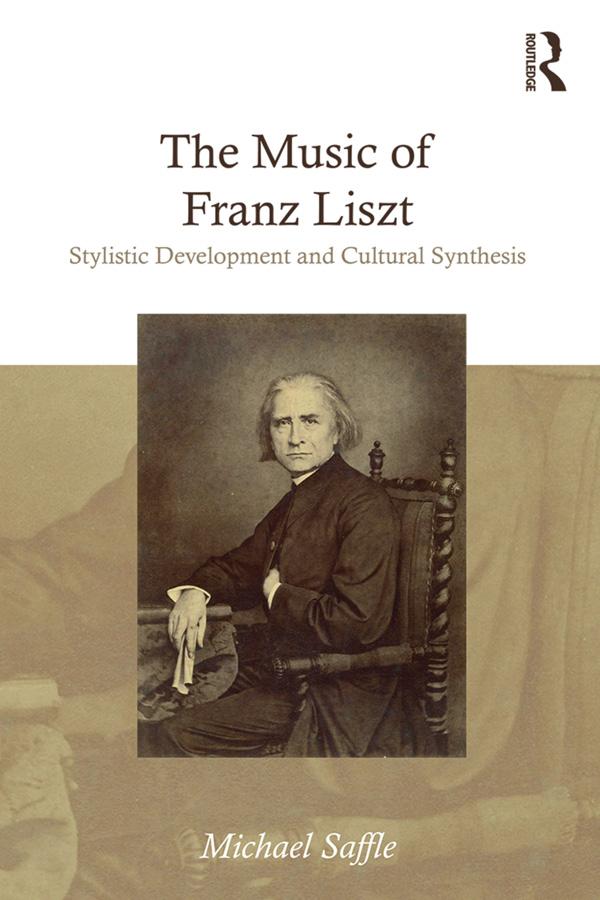
Much of Franz Liszt's musical legacy has often been dismissed as 'trivial’ or 'merely showy,' more or less peripheral contributions to nineteenth-century European culture. But Liszt was a mainstream composer in ways most of his critics have failed to acknowledge; he was also an incessant and often extremely successful innovator. Liszt's mastery of fantasy and sonata traditions, his painstaking settings of texts ranging from erotic verse to portions of the Catholic liturgy, and the remarkable self-awareness he demonstrated even in many of his most 'entertaining' pieces: all these things stamp him not only as a master of Romanticism and an early Impressionist, but as a precursor of Postmodern 'pop.' Liszt's Music places Liszt in historical and cultural focus. At the same time, it examines his principal contributions to musical literature -- from his earliest operatic paraphrases to his final explorations of harmonic and formal possibilities. Liszt's compositional methods, including his penchant for revision, problems associated with early editions of some of his works, and certain aspects of class and gender issues are also discussed. The first book-length assessment of Liszt as composer since Humphrey Searle’s 1956 volume, Liszt's Music is illustrated with well over 100 musical examples.
Betal nemt med kort, Klarna, Apple Pay eller Google Pay. Ikke tilfreds? Du har altid 14 dages fortrydelsesret. Læs mere i vores vilkår. Har du spørgsmål, så send os en mail på hello@memmo.org.
Memmo gør det nemmere at studere – uanset hvor du er i verden. Hos os samler du dine kursusbøger og smarte studieværktøjer ét sted: resuméer, quizzer, podcasts og flashcards. Og så er der Ted, din studieven, der svarer på alt, du undrer dig over. Over 50 000 studerende studerer allerede her – bygget til at hjælpe dig med at lære hurtigere og stresse mindre.