
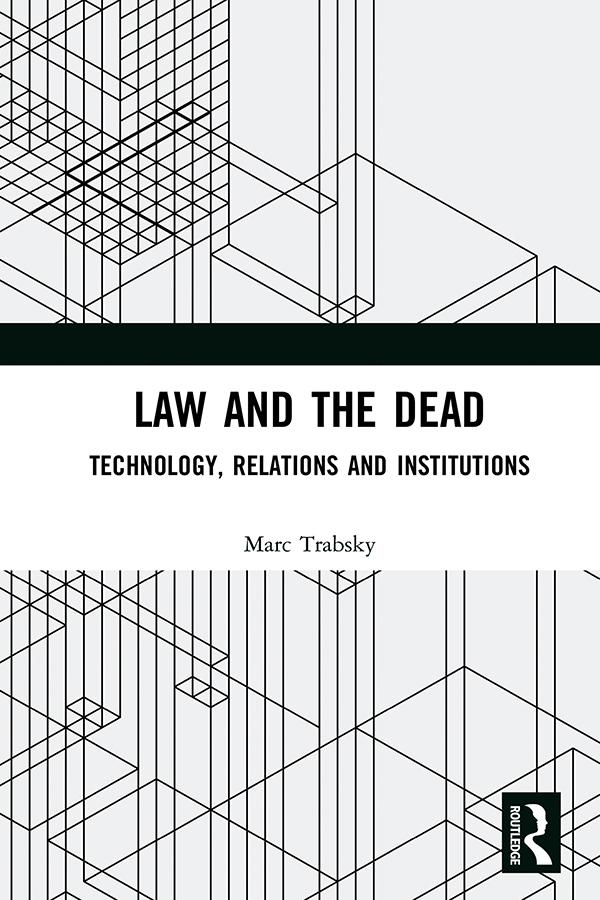
The governance of the dead in the eighteenth and nineteenth centuries gave rise to a new arrangement of thanato-politics in the West. Legal, medical and bureaucratic institutions developed innovative technologies for managing the dead, maximising their efficacy and exploiting their vitality. Law and the Dead writes a history of their institutional life in the nineteenth and twentieth centuries.
With a particular focus on the technologies of the death investigation process, including place-making, the forensic gaze, bureaucratic manuals, record-keeping and radiography, this book examines how the dead came to be incorporated into legal institutions in the modern era. Drawing on the writings of philosophers, historians and legal theorists, it offers tools for thinking through how the dead dwell in law, how their lives persist through the conduct of office, and how coroners assume responsibility for taking care of the dead.
This historical and interdisciplinary book offers a provocative challenge to conventional thinking about the sequestration of the dead in the nineteenth and twentieth centuries. It asks the reader to think through and with legal institutions when writing a history of the dead, and to trace the important role assumed by coroners in the governance of the dead. This book will be of interest to scholars working in law, history, sociology and criminology.
Betal nemt med kort, Klarna, Apple Pay eller Google Pay. Ikke tilfreds? Du har altid 14 dages fortrydelsesret. Læs mere i vores vilkår. Har du spørgsmål, så send os en mail på hello@memmo.org.
Memmo gør det nemmere at studere – uanset hvor du er i verden. Hos os samler du dine kursusbøger og smarte studieværktøjer ét sted: resuméer, quizzer, podcasts og flashcards. Og så er der Ted, din studieven, der svarer på alt, du undrer dig over. Over 50 000 studerende studerer allerede her – bygget til at hjælpe dig med at lære hurtigere og stresse mindre.