
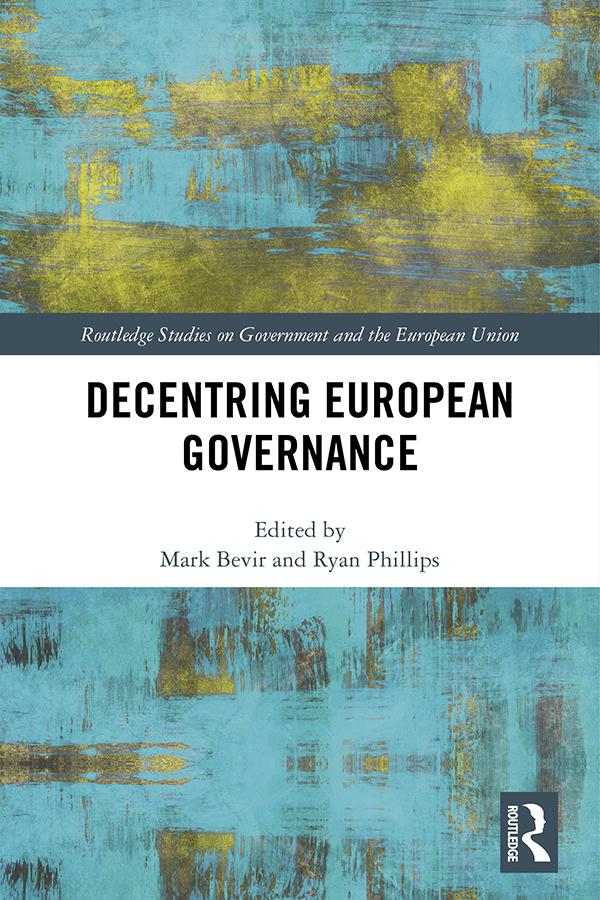
Conforming neither to the hierarchical and bureaucratic organization of the European nation-state nor the anarchical structure of international organizations, the European Union (EU) and its predecessors provide an exemplary site for developing a decentred approach to the study of governance.
The book offers an analysis of the formation and transformation of the EU as an example of governance above the nation-state and is framed by the recognition that the construction of the EU has resulted in variegated and decentred forms of governance. The chapters look at distinct aspects of EU governance to bring to light the influence of elite narratives, scientific rationalities, local traditions and meaningful practices in the making and remaking of European governance. As such, each chapter offers a unique contribution to the study of the EU. In doing so, the book challenges dominant narratives of European integration and policymaking that appeal to reified rationalities and social structures, and uncovers the contingency and conflict endemic to European governance.
This text will be of key interest to scholars and students of European Union politics, European politics/studies, governance and, more broadly, to public management, international organizations, anthropology and sociology.
Betal nemt med kort, Klarna, Apple Pay eller Google Pay. Ikke tilfreds? Du har altid 14 dages fortrydelsesret. Læs mere i vores vilkår. Har du spørgsmål, så send os en mail på hello@memmo.org.
Memmo gør det nemmere at studere – uanset hvor du er i verden. Hos os samler du dine kursusbøger og smarte studieværktøjer ét sted: resuméer, quizzer, podcasts og flashcards. Og så er der Ted, din studieven, der svarer på alt, du undrer dig over. Over 50 000 studerende studerer allerede her – bygget til at hjælpe dig med at lære hurtigere og stresse mindre.