
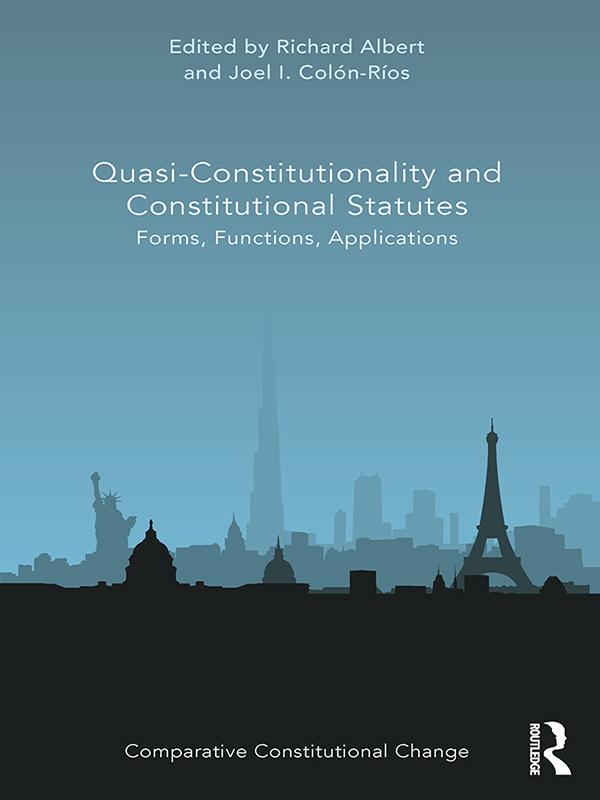
This book examines the interstices among statutory enactment, constitutional convention and formal constitution in which quasi-constitutionality exists. It provides a focal resource that can serve as a point of reference for scholars interested in quasi-constitutionality as a whole, from national and transnational perspectives, expanding on its many forms, functions, and applications with recourse to comparative insights. The book is divided in three main Parts, each of them preceded by a separate critical introduction in which an informed scholar contextualizes the chapters and offers reflections on the themes they develop. The first Part, titled 'Forms', is composed of chapters that address, from a theoretical and comparative perspective, questions related to the recognition of constitutional statutes and quasi-constitutional legislation. The second Part is titled 'Functions', and contains chapters that explore the explanatory power of quasi-constitutionality in different institutional contexts. The third Part, titled 'Applications', considers the ways in which constitutional statutes and quasi-constitutionality operate in relation to particular tensions and debates present in various jurisdictions.
Betal nemt med kort, Klarna, Apple Pay eller Google Pay. Ikke tilfreds? Du har altid 14 dages fortrydelsesret. Læs mere i vores vilkår. Har du spørgsmål, så send os en mail på hello@memmo.org.
Memmo gør det nemmere at studere – uanset hvor du er i verden. Hos os samler du dine kursusbøger og smarte studieværktøjer ét sted: resuméer, quizzer, podcasts og flashcards. Og så er der Ted, din studieven, der svarer på alt, du undrer dig over. Over 50 000 studerende studerer allerede her – bygget til at hjælpe dig med at lære hurtigere og stresse mindre.