
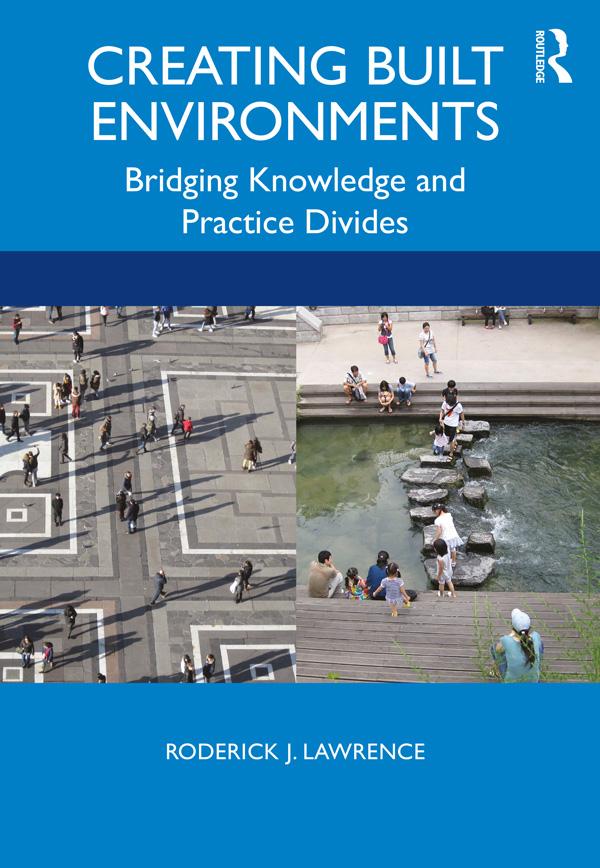
Built environments are complex, emergent, systemic, and require contextual analysis. They should be understood before reconsidering how professionals and researchers of the built environment are educated and trained to reduce the gap between knowledge, practice and real-world circumstances. There is an urgent need to rethink the role of policy makers, researchers, practitioners and laypeople in the construction, renovation and reuse of the built environment in order to deal with numerous environmental/ecological, economic/financial and social/ethical challenges of providing a habitat for current and future generations in a world of continual change. These challenges are too complex to be dealt with only by one discipline or profession. Combinations of different types of knowledge, knowing in praxis and tacit knowledge are needed.
This book presents and illustrates recent innovative contributions with case studies focusing on five strategic domains and the interrelations between them. These transdisciplinary contributions apply concepts, methods and tools that facilitate convergence and concerted action between participants collaborating in policy definition and project implementation. The methods and tools include experiments in living-labs, prototypes on site and virtual simulations, as well as participatory approaches including citizen science, the development of alternative scenarios, and visioning plausible futures.
Betal nemt med kort, Klarna, Apple Pay eller Google Pay. Ikke tilfreds? Du har altid 14 dages fortrydelsesret. Læs mere i vores vilkår. Har du spørgsmål, så send os en mail på hello@memmo.org.
Memmo gør det nemmere at studere – uanset hvor du er i verden. Hos os samler du dine kursusbøger og smarte studieværktøjer ét sted: resuméer, quizzer, podcasts og flashcards. Og så er der Ted, din studieven, der svarer på alt, du undrer dig over. Over 50 000 studerende studerer allerede her – bygget til at hjælpe dig med at lære hurtigere og stresse mindre.