
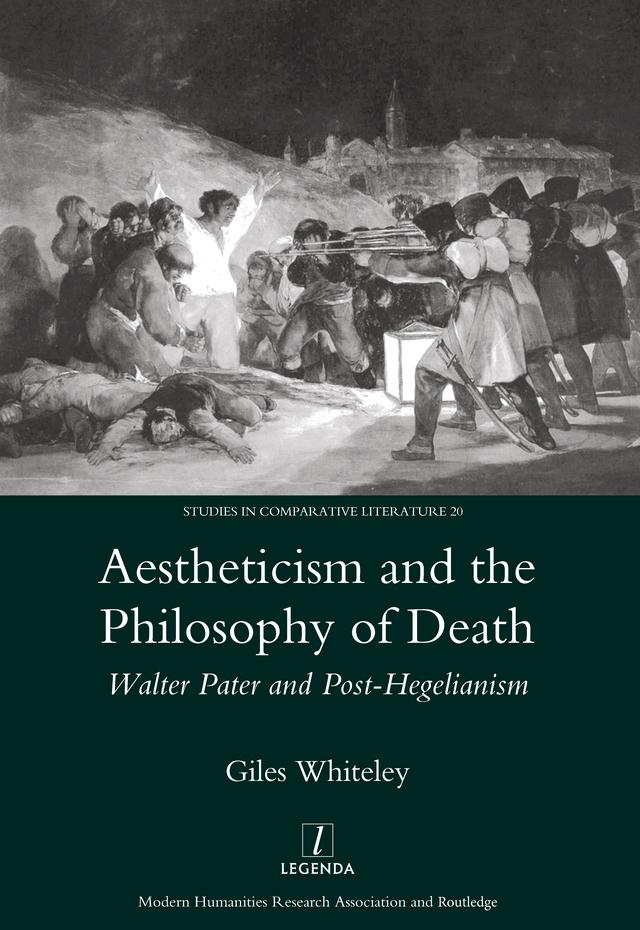
"Walter Pater, best known as the author of The Renaissance (1873) and as Oscar Wildes tutor and friend, was a leading figure in European aestheticism and British fin-de-siecle culture. Despite this, he has received only limited critical attention, and has tended to be read conservatively. Drawing on Paters unpublished manuscripts, Giles Whiteley challenges this view of Pater as a closeted don who spend the remainder of his life regretting the excesses of his Renaissance. Focusing on Paters reading of the German idealist philosopher, G. W. F. Hegel, Whiteley argues that Paters response to both the philosophical and the ideological legacies of idealism was significantly more advanced than has been hitherto thought. Presenting a persuasive new reading of the genre of the imaginary portrait Paters most elusive form of writing the book paints a picture of Walter Pater as a truly revolutionary thinker. Pater, like Nietzsche during the same period, breaks with the dialectic as a method. Anticipating the radical critiques of ideology of post- Hegelians such as Derrida and Deleuze, Pater becomes a radical and transgressive thinker in his own right."
Betal nemt med kort, Klarna, Apple Pay eller Google Pay. Ikke tilfreds? Du har altid 14 dages fortrydelsesret. Læs mere i vores vilkår. Har du spørgsmål, så send os en mail på hello@memmo.org.
Memmo gør det nemmere at studere – uanset hvor du er i verden. Hos os samler du dine kursusbøger og smarte studieværktøjer ét sted: resuméer, quizzer, podcasts og flashcards. Og så er der Ted, din studieven, der svarer på alt, du undrer dig over. Over 50 000 studerende studerer allerede her – bygget til at hjælpe dig med at lære hurtigere og stresse mindre.
Du kan måske også lide
Køb bogen0