
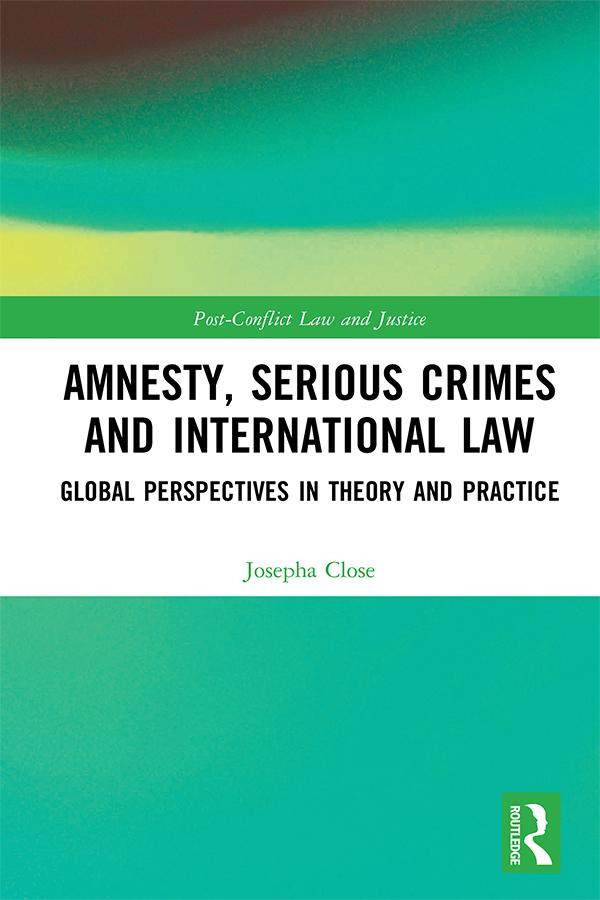
Amnesty, Serious Crimes and International Law examines the permissibility of amnesties for serious crimes in the contemporary international order. In the last few decades, there has been a growing tendency to consider that amnesties are prohibited in respect of certain grave crimes. However, the question remains controversial as there is no explicit treaty ban and general amnesties continue to be frequently issued in post-conflict and transitional contexts. The first part of the book explores the use of amnesties from antiquity to the present day. It reviews amnesty traditions in ancient societies and provides a global picture of modern amnesties. In parallel, it traces the development of the accountability paradigm underpinning the current prohibitive stance on amnesties. The second part assesses the position of modern international law on amnesties. It comprehensively analyses the main arguments supporting the existence of a general amnesty ban, including the duty to prosecute international crimes, the right to redress of victims of human rights violations, international standards and trends in state practice, and the mandate of international criminal courts. The book argues that, while international legal or policy requirements restrict the freedom of states to extend amnesty in respect of serious crimes, or the effectiveness of amnesty measures in preventing the prosecution of such crimes, these restrictions do not add up to an absolute and universal prohibition.
Betal nemt med kort, Klarna, Apple Pay eller Google Pay. Ikke tilfreds? Du har altid 14 dages fortrydelsesret. Læs mere i vores vilkår. Har du spørgsmål, så send os en mail på hello@memmo.org.
Memmo gør det nemmere at studere – uanset hvor du er i verden. Hos os samler du dine kursusbøger og smarte studieværktøjer ét sted: resuméer, quizzer, podcasts og flashcards. Og så er der Ted, din studieven, der svarer på alt, du undrer dig over. Over 50 000 studerende studerer allerede her – bygget til at hjælpe dig med at lære hurtigere og stresse mindre.