
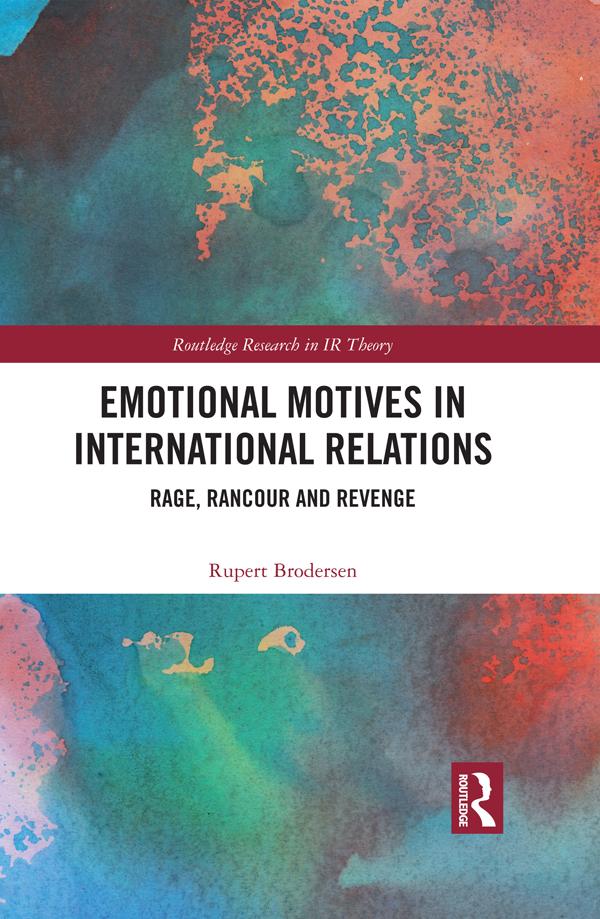
The study of emotions in International Relations is gaining wide-spread attention. Within the "emotional turn" in IR the emotion of rage however has not been given sufficient attention, instead being used as short-hand for irrationality and excess.
Rage is arguably one of the oldest and most destructive emotions in human affairs. This book offers an innovative approach that seeks to split rage into its traditional manifestation of aggression and violence, and into a less visible, passive manifestation of Nietzschean Ressentiment. This model facilitates a comprehensive understanding of revisionist motivation, from the violence of ISIS to the oppositionism of Putin’s Russia. The aim is to illustrate how a lack of violence can belie vengeful impulses and a silent rage, and how acts of violence, regardless of brutality, are often framed as a type of justice and "moral imperative" in the mind of the aggressor. This book raises serious questions and concerns about legitimacy and order in global affairs, and offers a firm theoretical basis for the exploration of present day conflicts.
Betal nemt med kort, Klarna, Apple Pay eller Google Pay. Ikke tilfreds? Du har altid 14 dages fortrydelsesret. Læs mere i vores vilkår. Har du spørgsmål, så send os en mail på hello@memmo.org.
Memmo gør det nemmere at studere – uanset hvor du er i verden. Hos os samler du dine kursusbøger og smarte studieværktøjer ét sted: resuméer, quizzer, podcasts og flashcards. Og så er der Ted, din studieven, der svarer på alt, du undrer dig over. Over 50 000 studerende studerer allerede her – bygget til at hjælpe dig med at lære hurtigere og stresse mindre.