
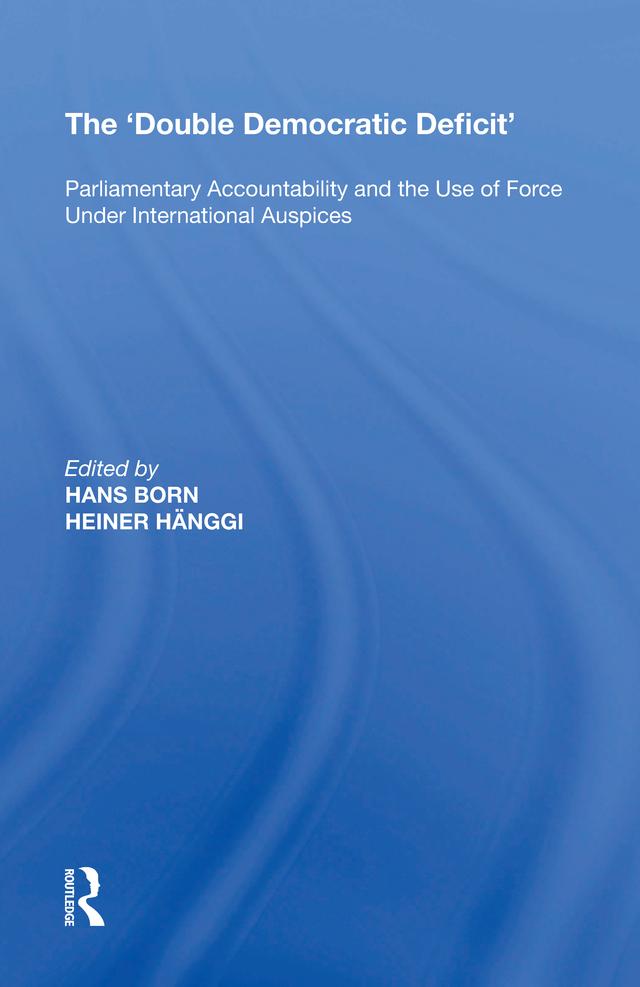
Many current threats to security arising from terrorism, 'rogue' states and civil wars are highly complex and often transnational in nature and effect. Such threats can no longer be meaningfully addressed at the national level alone but require an international response. Since the end of the Cold War, the use of force under international auspices (UN, NATO, EU) has increased substantially. However, such actions have not necessarily been accompanied by improvements in their democratic accountability. Pre-existing problems and inadequacies of parliamentary oversight of armed forces and use of force at the national level of many democratic states are mirrored, and even magnified, at the international level. The effect of imperfect democratic controls at the national level and the challenges to provide transparent and accountable multilateral responses results in the so-called double democratic deficit of the international use of force. Each chapter in this innovative work analyses the challenges of parliamentary and democratic supervision of international security structures and puts forward proposals on how to improve democratic accountability of multinational responses to complex security challenges.
Betal nemt med kort, Klarna, Apple Pay eller Google Pay. Ikke tilfreds? Du har altid 14 dages fortrydelsesret. Læs mere i vores vilkår. Har du spørgsmål, så send os en mail på hello@memmo.org.
Memmo gør det nemmere at studere – uanset hvor du er i verden. Hos os samler du dine kursusbøger og smarte studieværktøjer ét sted: resuméer, quizzer, podcasts og flashcards. Og så er der Ted, din studieven, der svarer på alt, du undrer dig over. Over 50 000 studerende studerer allerede her – bygget til at hjælpe dig med at lære hurtigere og stresse mindre.
Du kan måske også lide
Køb bogen0