
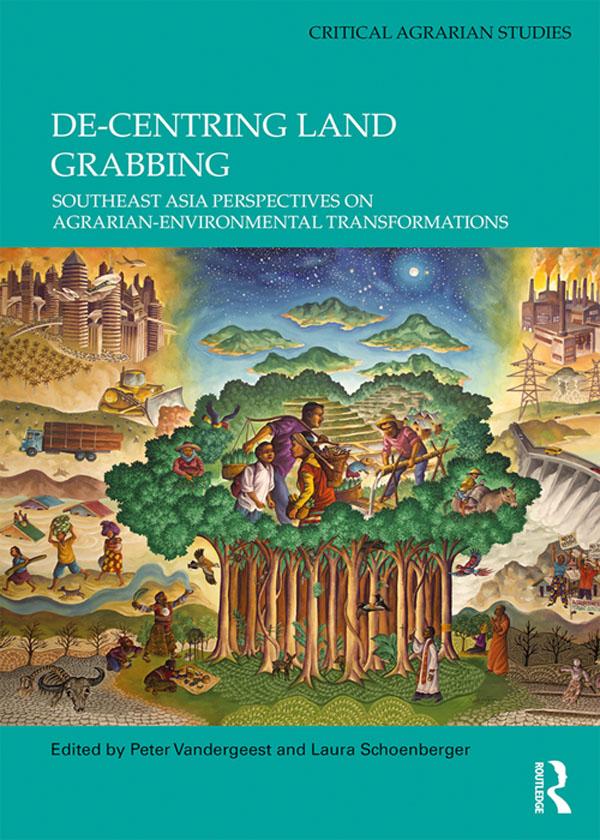
Southeast Asia has been portrayed as a key site in the global land grab. Featuring leading scholars in the field, this collection critically examines the nature and extent of land grabbing in Southeast Asia, and seeks to locate this phenomena in broader agrarian and environmental transitions (AET). The individual contributions suggest that there is little evidence of a global land grab in Southeast Asia, but that over the last ten years the surge of plantations and processes of land grabbing has been a key feature in the region. The collection considers how broader AET processes may be brought more clearly into focus by decentring land grabbing, including consideration of its absence as well presence. The diversity of cases in this collection coalesces around the productive tension in land grab studies between global capitalist processes on the one hand, and context-specificity and contingent motivations fuelling the expansion of large-scale plantations for oil palm, rubber, cassava and other cash crops, on the other hand. The contributors further broaden the entry points to consider cross-sectoral AET processes such as enclosures for mining, conservation and hydropower and explore the contingencies that help to maintain smallholder production.
The chapters originally published as a special issue in The Journal of Peasant Studies.
Betal nemt med kort, Klarna, Apple Pay eller Google Pay. Ikke tilfreds? Du har altid 14 dages fortrydelsesret. Læs mere i vores vilkår. Har du spørgsmål, så send os en mail på hello@memmo.org.
Memmo gør det nemmere at studere – uanset hvor du er i verden. Hos os samler du dine kursusbøger og smarte studieværktøjer ét sted: resuméer, quizzer, podcasts og flashcards. Og så er der Ted, din studieven, der svarer på alt, du undrer dig over. Over 50 000 studerende studerer allerede her – bygget til at hjælpe dig med at lære hurtigere og stresse mindre.