
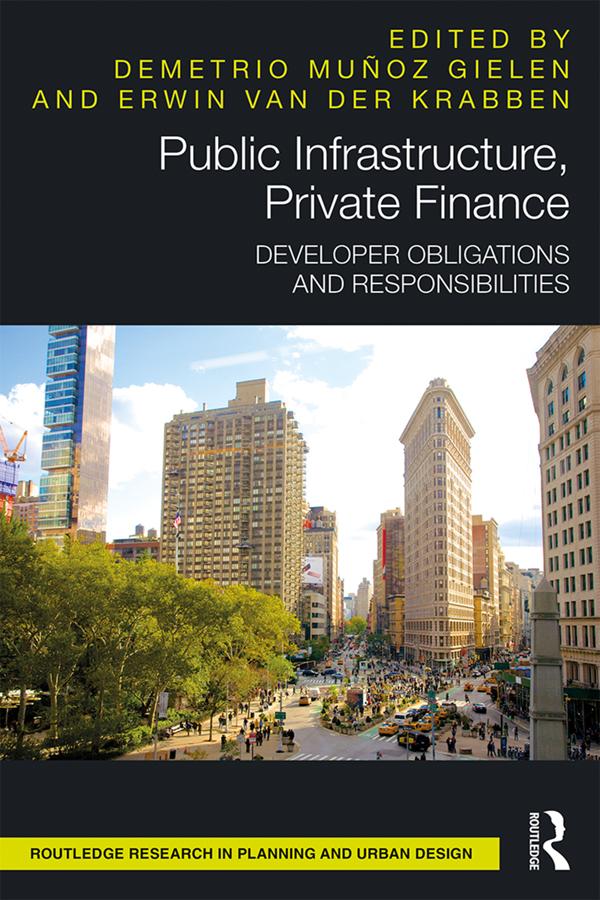
Traditionally, the public sector has been responsible for the provision of all public goods necessary to support sustainable urban development, including public infrastructure such as roads, parks, social facilities, climate mitigation and adaptation, and affordable housing. With the shift in recent years towards public infrastructure being financed by private stakeholders, the demand for transparent guidance to ensure accountability for the responsibilities held by developers has risen.
Within planning practice and urban development, the shift towards private financing of public infrastructure has translated into new tools being implemented to provide joint responsibility for upholding requirements. Developer obligations are contributions made by property developers and landowners towards public infrastructure in exchange for decisions on land-use regulations which increase the economic value of their land. This book presents insight into the design and practical results of these obligations in different countries and their effects on municipal financial health, demonstrating the increasing importance of efficient bargaining processes and the institutional design of developer obligations in modern urban planning.
Primarily written for academics in land-use planning, real estate, urban development, law, and economics, it will additionally be useful to policy makers and practitioners pursuing the improvement of public infrastructure financing.
Betal nemt med kort, Klarna, Apple Pay eller Google Pay. Ikke tilfreds? Du har altid 14 dages fortrydelsesret. Læs mere i vores vilkår. Har du spørgsmål, så send os en mail på hello@memmo.org.
Memmo gør det nemmere at studere – uanset hvor du er i verden. Hos os samler du dine kursusbøger og smarte studieværktøjer ét sted: resuméer, quizzer, podcasts og flashcards. Og så er der Ted, din studieven, der svarer på alt, du undrer dig over. Over 50 000 studerende studerer allerede her – bygget til at hjælpe dig med at lære hurtigere og stresse mindre.