
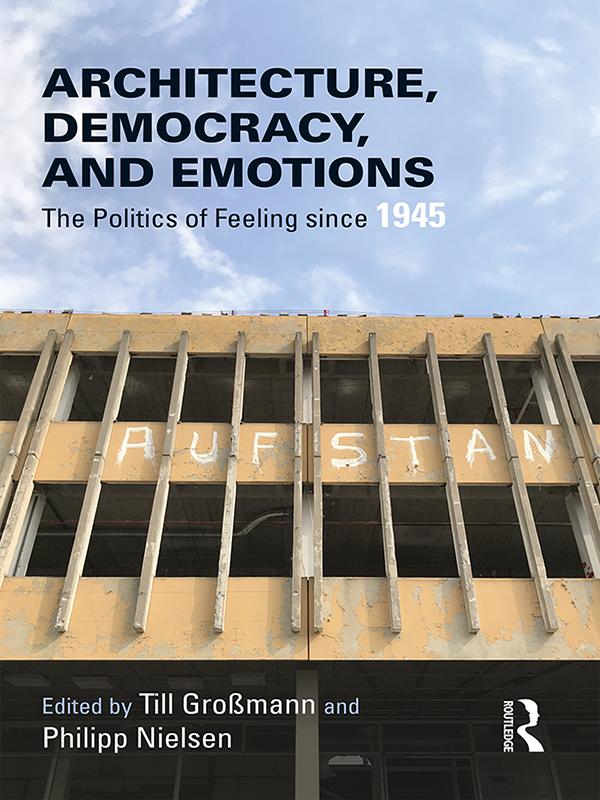
After 1945 it was not just Europe’s parliamentary buildings that promised to house democracy: hotels in Turkey and Dutch shopping malls proposed new democratic attitudes and feelings. Housing programs in the United Kingdom, the United States, and the Soviet Union were designed with the aim of creating new social relations among citizens and thus better, more equal societies. Architecture, Democracy, and Emotions focuses on these competing promises of consumer democracy, welfare democracy, and socialist democracy. Spanning from Turkey across Eastern and Western Europe to the United States, the chapters investigate the emotional politics of housing and representation during the height of the Cold War, as well as its aftermath post-1989.
The book assembles detailed research on how the claims and aspirations of being "democratic" influenced the affects of architecture, and how these claims politicized space. Architecture, Democracy, and Emotions contributes to the study of Europe’s "democratic age" beyond Cold War divisions without diminishing political differences. The combination of an emotional history of democracy with an architectural history of emotions distinguishes the book’s approach from other recent investigations into the interconnection of mind, body, and space.
Betal nemt med kort, Klarna, Apple Pay eller Google Pay. Ikke tilfreds? Du har altid 14 dages fortrydelsesret. Læs mere i vores vilkår. Har du spørgsmål, så send os en mail på hello@memmo.org.
Memmo gør det nemmere at studere – uanset hvor du er i verden. Hos os samler du dine kursusbøger og smarte studieværktøjer ét sted: resuméer, quizzer, podcasts og flashcards. Og så er der Ted, din studieven, der svarer på alt, du undrer dig over. Over 50 000 studerende studerer allerede her – bygget til at hjælpe dig med at lære hurtigere og stresse mindre.