
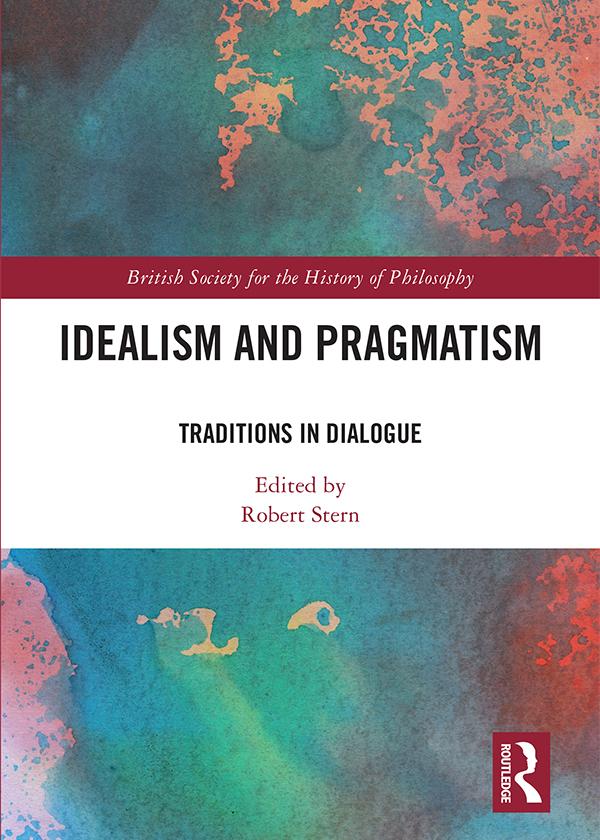
This book explores the complex relationship between the philosophical schools of idealism and pragmatism. Idealism is the older tradition, with roots in Plato and Platonism, and has been developed in a myriad of forms. At heart, it holds that reality is either mind-like, or is contained in the mind. Pragmatism is a newer school, traceable to the work of philosophers such as C.S. Peirce and William James in the mid-nineteenth century. It offers a distinctive account of meaning, knowledge, and metaphysics which stresses our place as agents within the world.
While these two schools have often been set at odds with one another, it is increasingly recognized that idealism and pragmatism share some important common ground, and that their respective histories have been intertwined. The contributions to this volume, by leading international scholars, put these debates in a new light by studying the interrelation across a range of thinkers and issues, including Kant, Schelling, Hegel, Royce, Renouvier and Collingwood on the one side, and Peirce, James, Dewey and Brandom on the other. This book was first published as a special issue of the British Journal for the History of Philosophy.
Betal nemt med kort, Klarna, Apple Pay eller Google Pay. Ikke tilfreds? Du har altid 14 dages fortrydelsesret. Læs mere i vores vilkår. Har du spørgsmål, så send os en mail på hello@memmo.org.
Memmo gør det nemmere at studere – uanset hvor du er i verden. Hos os samler du dine kursusbøger og smarte studieværktøjer ét sted: resuméer, quizzer, podcasts og flashcards. Og så er der Ted, din studieven, der svarer på alt, du undrer dig over. Over 50 000 studerende studerer allerede her – bygget til at hjælpe dig med at lære hurtigere og stresse mindre.