
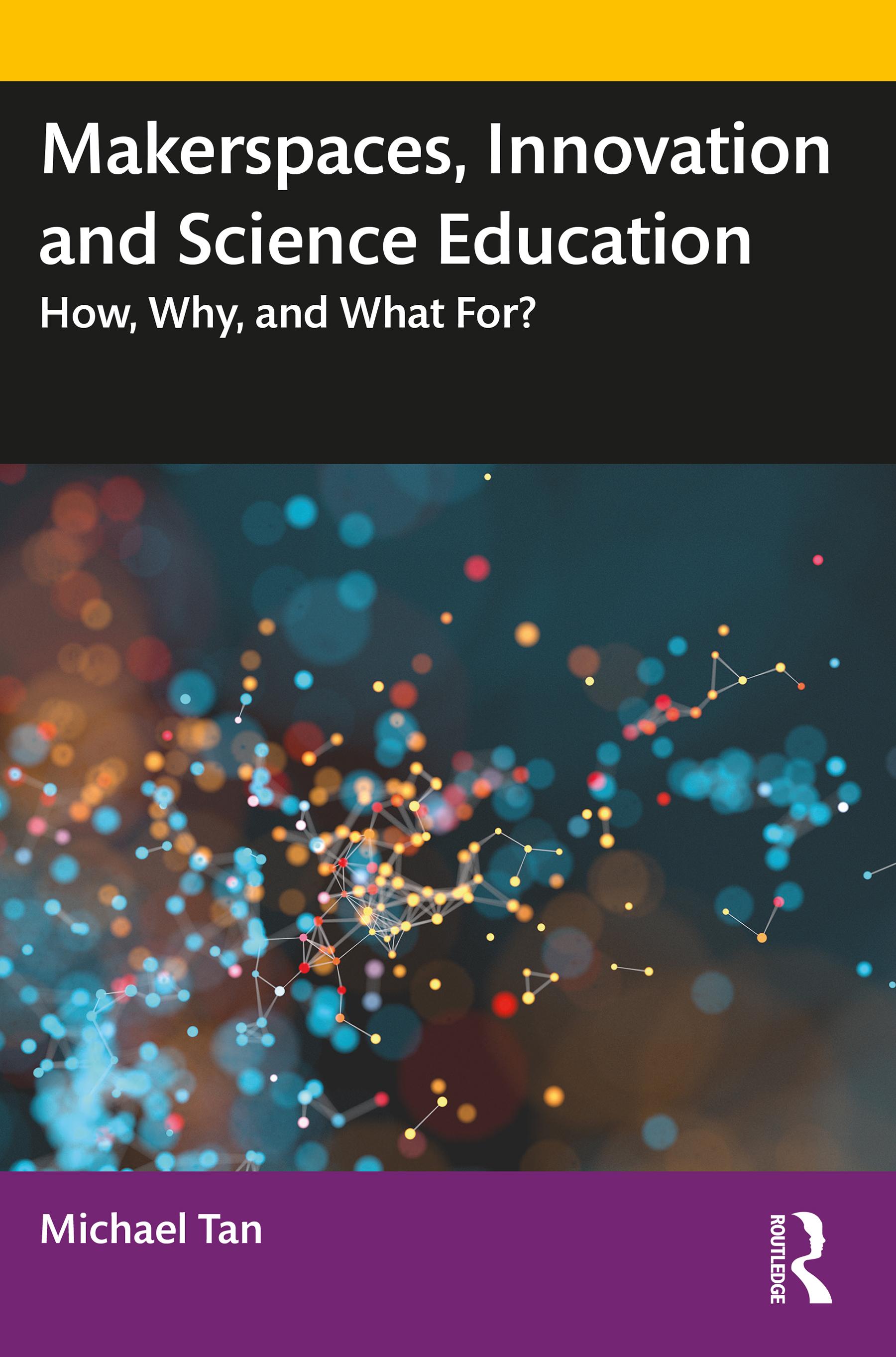
This book provides an overview to a range of theories in science and technology that inform the different ways in which makerspaces can be educative. Makerspaces are an indispensable site for science, technology, engineering, and mathematics (STEM) instruction and pose novel risks and opportunities for STEM instruction. Educators are likely to reach towards activities that have a high degree of engagement, but this might result in observations like 'it looks like fun, but what are they learning?'.
Beginning from the question of how we know what we know in science, the author asserts that understanding scientific knowledge requires us to know more than the abstract concepts typically presented in schools. The social and material aspects of knowledge are also important—these take the form of questions such as: What is the interplay between knowledge and power? How do we understand that we can have a ‘feel’ for materials and artefacts that we cannot completely describe in words? How do we know what ideas ought to be made real though technology and engineering? Significantly, this book also discusses the ethical dimensions of STEM education, in thinking about the kinds of STEM education that could be useful for open futures.
This book will be useful to graduate students and educators seeking an expansive view of STEM education. More generally, these ideas outline a possible new strategy for a vision of school that is not merely training or preparing students for work. Education needs to also prepare students for sociopolitical participation, and with STEM being central to our contemporary lives, this book provides insights for how this can happen in makerspaces.
Betal nemt med kort, Klarna, Apple Pay eller Google Pay. Ikke tilfreds? Du har altid 14 dages fortrydelsesret. Læs mere i vores vilkår. Har du spørgsmål, så send os en mail på hello@memmo.org.
Memmo gør det nemmere at studere – uanset hvor du er i verden. Hos os samler du dine kursusbøger og smarte studieværktøjer ét sted: resuméer, quizzer, podcasts og flashcards. Og så er der Ted, din studieven, der svarer på alt, du undrer dig over. Over 50 000 studerende studerer allerede her – bygget til at hjælpe dig med at lære hurtigere og stresse mindre.