
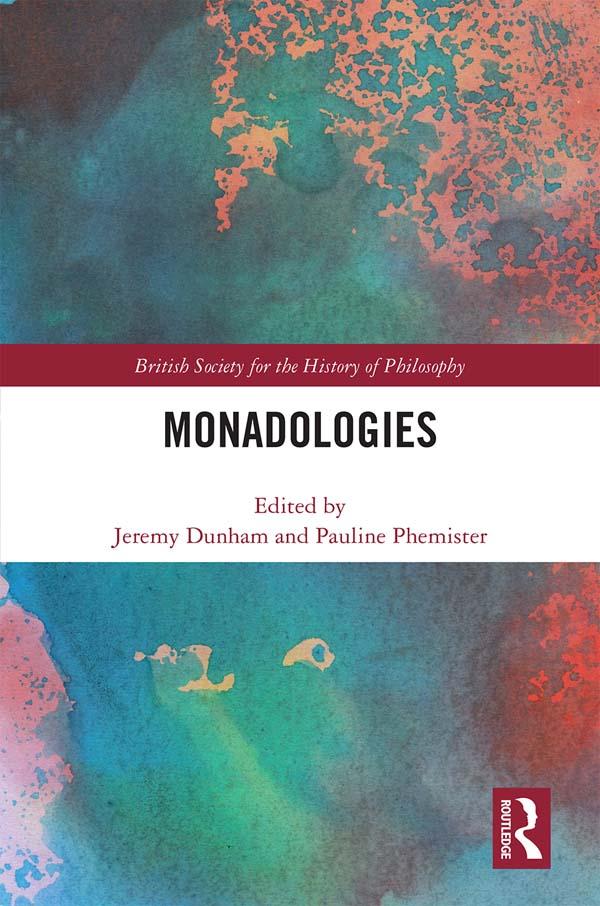
According to the received view, Kant’s critical revolution put an end to the kind of metaphysics of which Leibniz’s ‘Monadology’ is the example par excellence. This volume challenges Kant’s claim by providing a far more nuanced version of philosophy’s ‘post-Kantian’ tradition that spans from the late eighteenth to the early twentieth century and brings to light a rich tradition of new ‘monadologists’, many of whom have been unjustifiably forgotten by contemporary historians of philosophy. Through this complex dialogue, monadology is shown to be a remarkably fecund hypothesis, with many possible variations and developments. The volume’s focus on monadology exposes the depth and breadth of the post-Kantian period in an original and previously unexplored way and opens up numerous avenues for future research. Crucially, however, this volume not only shows that monadological metaphysics did continue after Kant but also asks the critical question of whether it should have done so. Consequently, the question of whether monadological metaphysics could also have a future is shown to be relevant in a way that was previously almost inconceivable.
This book was originally published as a special issue of the British Journal for the History of Philosophy.
Betal nemt med kort, Klarna, Apple Pay eller Google Pay. Ikke tilfreds? Du har altid 14 dages fortrydelsesret. Læs mere i vores vilkår. Har du spørgsmål, så send os en mail på hello@memmo.org.
Memmo gør det nemmere at studere – uanset hvor du er i verden. Hos os samler du dine kursusbøger og smarte studieværktøjer ét sted: resuméer, quizzer, podcasts og flashcards. Og så er der Ted, din studieven, der svarer på alt, du undrer dig over. Over 50 000 studerende studerer allerede her – bygget til at hjælpe dig med at lære hurtigere og stresse mindre.