
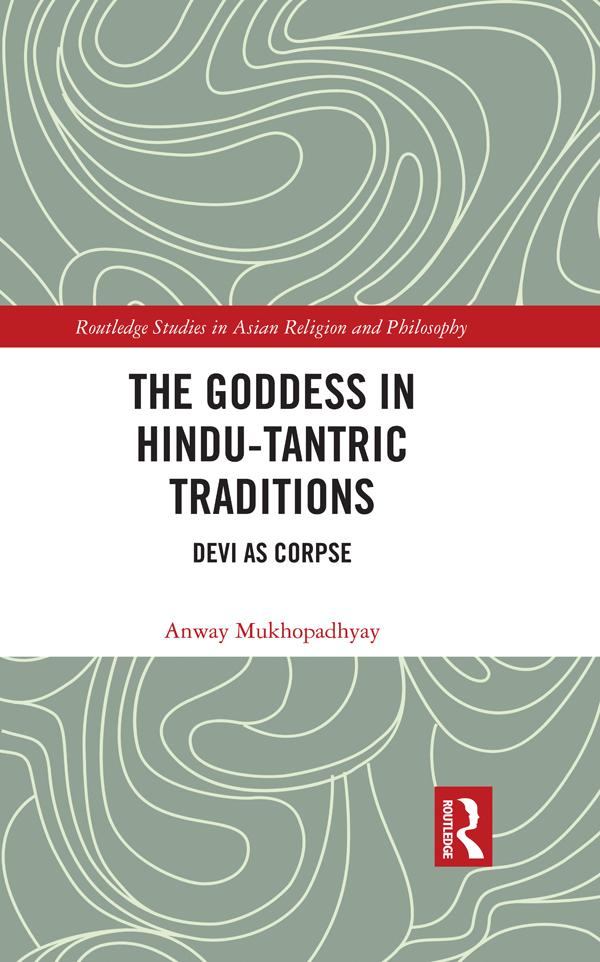
The Great Goddess, in her various puranic and tantric forms, is often figured as sitting on a corpse which is identified as Shiva-as-shava (God Shiva, the consort of the Devi and an iconic representation of the Absolute without attributes, the Nirguna Brahman). Hence, most of the existing critical works and ethnographic studies on Shaktism and the tantras have focused on the theological and symbolic paraphernalia of the corpses which operate as the asanas (seats) of the Devi in her various iconographies.
This book explores the figurations of the Goddess as corpse in several Hindu puranic and Shakta-tantric texts, popular practices, folk belief systems, legends and various other cultural phenomena based on this motif. It deals with a more intricate and fundamental issue than existing works on the subject: how and why is the Devi – herself - figured as a corpse in the Shakta texts, belief systems and folk practices associated with the tantras? The issues which have been raised in this book include: how does death become a complement to life within this religious epistemology? How does one learn to live with death, thereby lending new definitions and new epistemic and existential dimensions to life and death? And what is the relation between death and gender within this kind of figuration of the Goddess as death and dead body? Analysing multiple mythic narratives, hymns and scriptural texts where the Devi herself is said to take the form of the Shava (the corpse) as well as the Shakti who animates dead matter, this book focuses not only on the concept of the theological equivalence of the Shava (Shiva as corpse) and the Shakti (Energy) in tantras but also on the status of the Divine Mother as the Great Bridge between the apparently irreconcilable opposites, the mediatrix between Spirit and Matter, death and life, existence-in-stasis and existence-in-kinesis.
This book makes an important contribution to the fields of Hindu Studies, Goddess Spirituality, South Asian Religions, Women and Religion, India, Studies in Shaktism and Tantra, Cross-cultural Religious Studies, Gender Studies, Postcolonial Spirituality and Ecofeminism.
Betal nemt med kort, Klarna, Apple Pay eller Google Pay. Ikke tilfreds? Du har altid 14 dages fortrydelsesret. Læs mere i vores vilkår. Har du spørgsmål, så send os en mail på hello@memmo.org.
Memmo gør det nemmere at studere – uanset hvor du er i verden. Hos os samler du dine kursusbøger og smarte studieværktøjer ét sted: resuméer, quizzer, podcasts og flashcards. Og så er der Ted, din studieven, der svarer på alt, du undrer dig over. Over 50 000 studerende studerer allerede her – bygget til at hjælpe dig med at lære hurtigere og stresse mindre.