
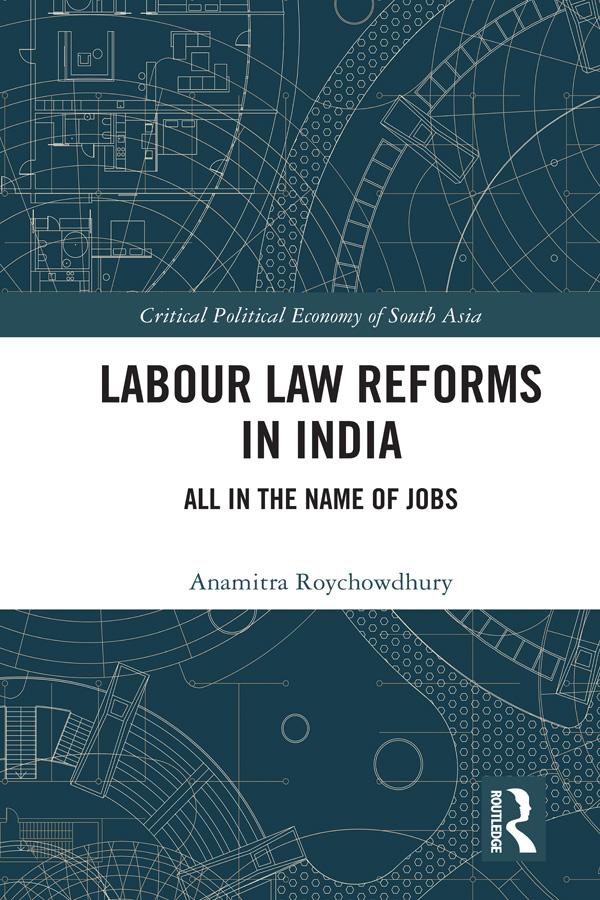
Labour market flexibility is one of the most closely debated public policy issues in India. This book provides a theoretical framework to understand the subject, and empirically examines to what extent India’s ‘jobless growth’ may be attributed to labour laws. There is a pervasive view that the country’s low manufacturing base and inability to generate jobs is primarily due to rigid labour laws. Therefore, job creation is sought to be boosted by reforming labour laws. However, the book argues that if labour laws are made flexible, then there are adverse consequences for workers: dismantled job security weakens workers’ bargaining power, incapacitates trade union movement, skews class distribution of output, dilutes workers’ rights, and renders them vulnerable. The book:
- identifies and critically examines the theory underlying the labour market flexibility (LMF) argument
- employs innovative empirical methods to test the LMF argument
- offers an overview of the organised labour market in India
- comprehensively discusses the proposed/instituted labour law reforms in the country
- contextualises the LMF argument in a macroeconomic setting
- discusses the political economy of labour law reforms in India.
This book will interest scholars and researchers in economics, development studies, and public policy as well as economists, policymakers, and teachers of human resource management.
Betal nemt med kort, Klarna, Apple Pay eller Google Pay. Ikke tilfreds? Du har altid 14 dages fortrydelsesret. Læs mere i vores vilkår. Har du spørgsmål, så send os en mail på hello@memmo.org.
Memmo gør det nemmere at studere – uanset hvor du er i verden. Hos os samler du dine kursusbøger og smarte studieværktøjer ét sted: resuméer, quizzer, podcasts og flashcards. Og så er der Ted, din studieven, der svarer på alt, du undrer dig over. Over 50 000 studerende studerer allerede her – bygget til at hjælpe dig med at lære hurtigere og stresse mindre.