
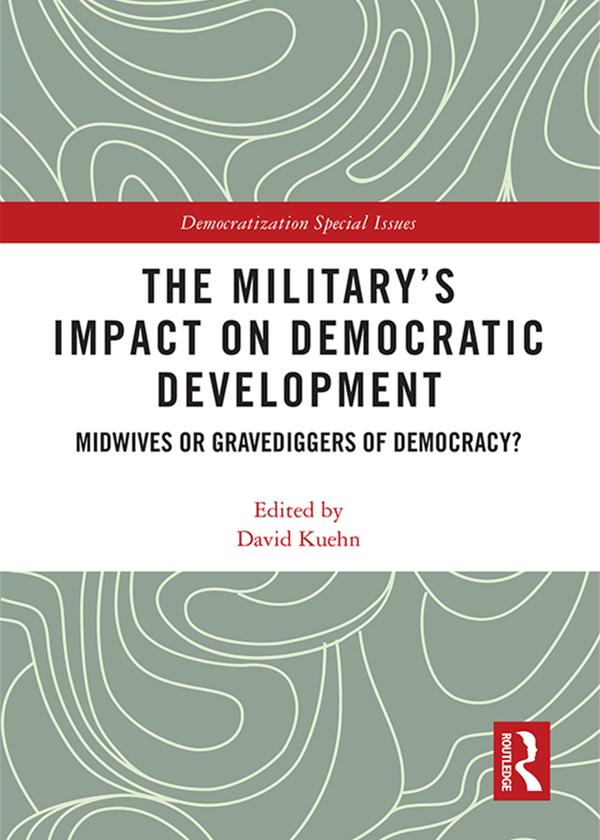
Despite the decline in the number of military coups since the 1960s and 1970s, Militaries continue to be crucial political actors in many world regions. Their impact on the democratic development of nations, however, has been mixed. On the one hand, coups against democratically elected leaders in Mali (2012), Egypt (2013), and Thailand (2014) have spelled doom for these countries’ nascent democratic regimes and have ushered in new periods of military dominance in politics. The cases of Portugal (1974), the Philippines (1986), and Tunisia (2011), on the other hand, show that the military’s decision not to defend authoritarian leaders against mass protests contributed crucially to the fall of dictatorships and facilitated transitions to democracy. This volume addresses the military’s ambivalent role as "midwife" or "gravedigger" of democracy and highlights the often multi-layered and complex relationship between militaries’ political behaviour and democratization.
The chapters were originally published in a special issue of Democratization.
Betal nemt med kort, Klarna, Apple Pay eller Google Pay. Ikke tilfreds? Du har altid 14 dages fortrydelsesret. Læs mere i vores vilkår. Har du spørgsmål, så send os en mail på hello@memmo.org.
Memmo gør det nemmere at studere – uanset hvor du er i verden. Hos os samler du dine kursusbøger og smarte studieværktøjer ét sted: resuméer, quizzer, podcasts og flashcards. Og så er der Ted, din studieven, der svarer på alt, du undrer dig over. Over 50 000 studerende studerer allerede her – bygget til at hjælpe dig med at lære hurtigere og stresse mindre.